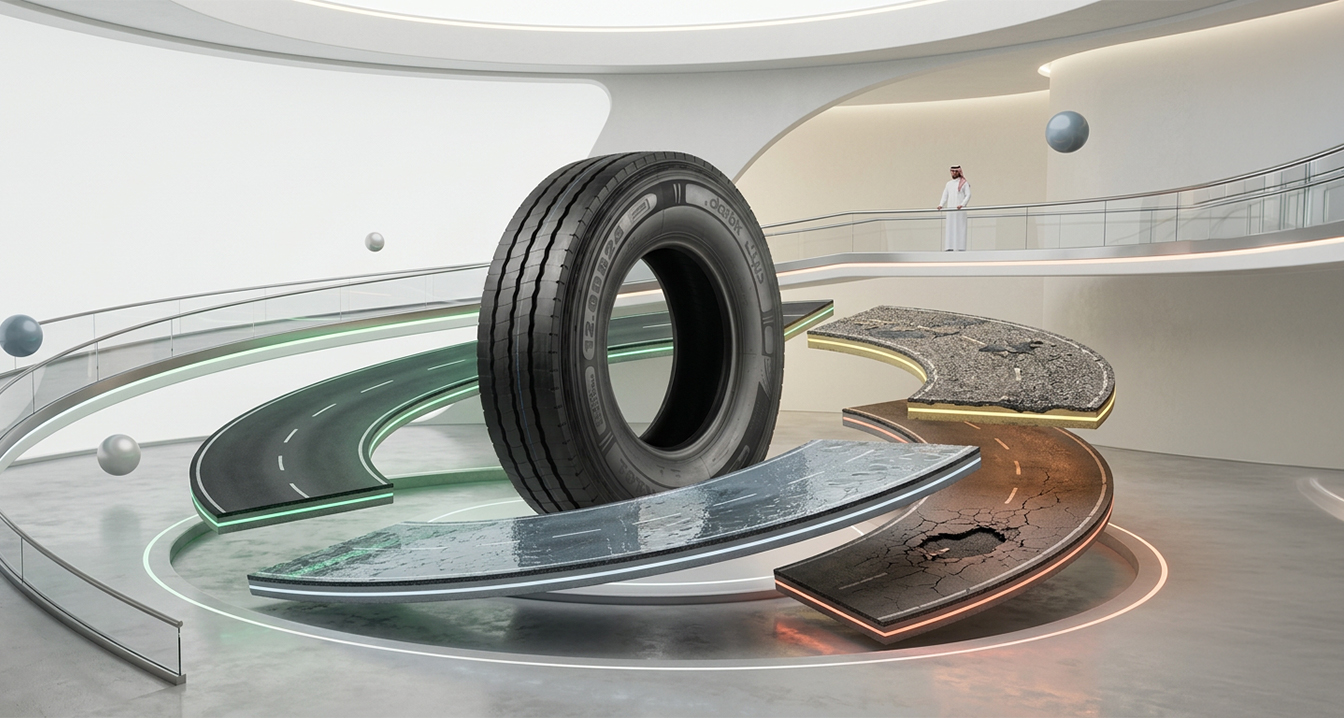
Did you know that tire rotation is a key step to ensure even wear across all four tires, thereby extending their lifespan and maintaining vehicle stability and safety on the road?
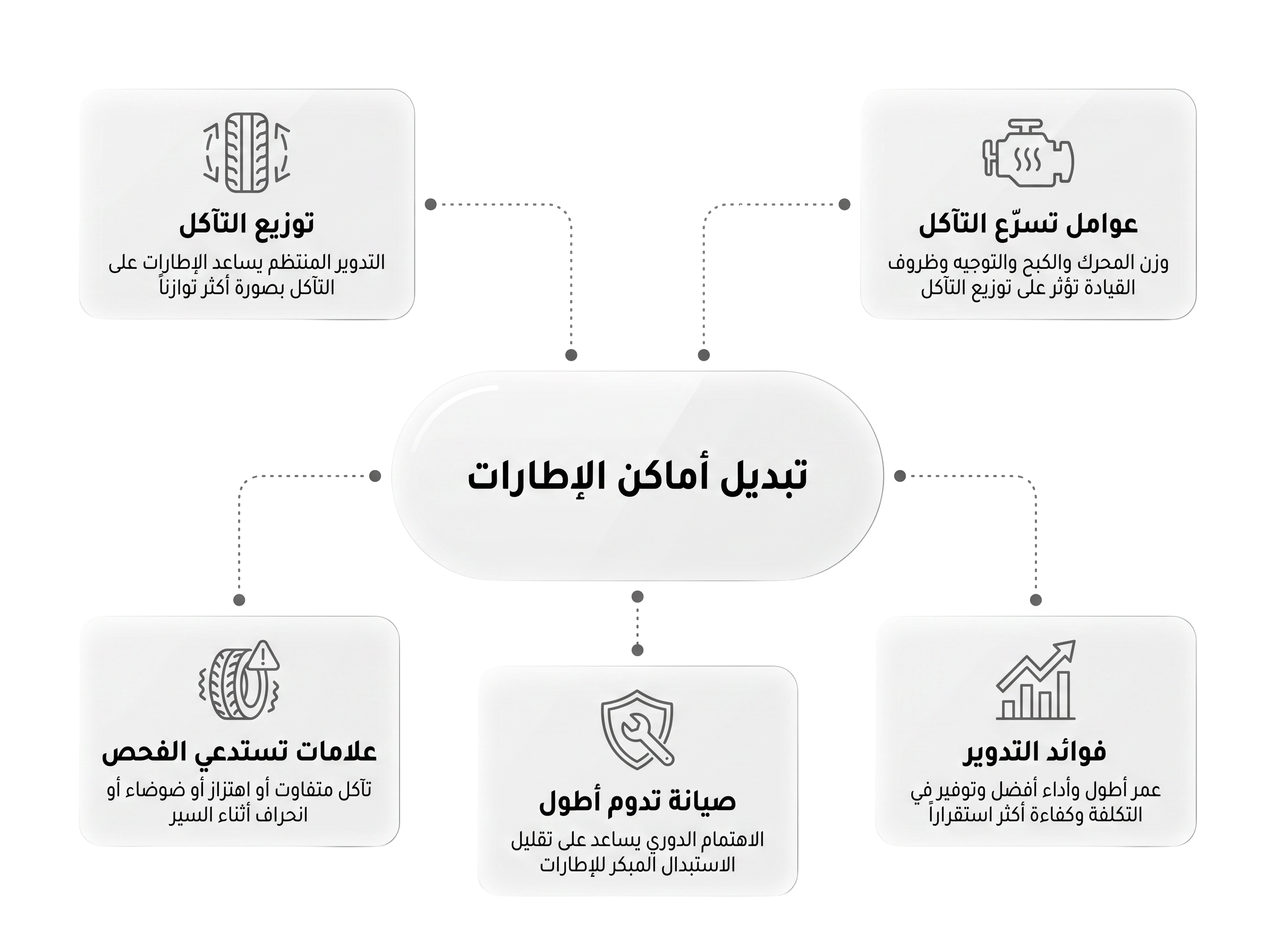
The main reason for this is that front tires wear out faster than rear ones due to the weight of the engine, steering maneuvers during turns, and friction caused by braking.
In the following lines, we will explain everything you need to know about tire rotation, its benefits, and the correct ways to perform it.
What is tire rotation?
Tire rotation is the process of moving each tire from its position on the vehicle to another location, whether from front to back or side to side, to maximize the utility of the tire set, ensure even wear, extend their lifespan, and improve performance.
"Tire rotation is a key step to ensure even wear across all four tires, thereby extending their lifespan and maintaining vehicle stability and safety on the road."
Why should you rotate your tires?
Experts recommend redistributing tires because they tend to
wear at different rates depending on their position on the vehicle. Tires on the drive axle—the axle that receives power from the engine—wear out faster due to power transmission and torque.
Front tires suffer more than others in most modern front-wheel-drive cars because they bear the weight of the engine, receive the driving force, and handle the bulk of braking and steering forces. The situation is reversed in rear-wheel-drive cars.
"Front tires in most modern front-wheel-drive cars wear out faster because they bear the weight of the engine, receive the driving force, and handle the bulk of braking and steering forces."
Additional factors affecting tire wear
There are several other factors that make tire rotation an absolute necessity, most notably:
- Engine weight
The engine is located at the front in most cars, which causes the front tires to carry more weight than the rear ones, leading them to wear out faster.
- Braking
Braking is applied more heavily to the front tires in most vehicles, causing additional wear compared to the rear tires.
- Driving Conditions
Driving on off-road or rocky terrain leads to accelerated tire wear compared to driving in urban areas or on highways.
- Steering
The front tires are responsible for steering the vehicle, which places additional stress on them.
Benefits of Tire Rotation
Tire rotation is a simple investment that saves you from high costs and provides a safer, smoother driving experience. Its key benefits are summarized below:
- Extending Tire Life
The primary benefit of tire rotation is extending their lifespan by distributing wear evenly across all tires. Estimates suggest that regular rotation can extend tire life by up to 25%.
- Improving Driving Performance and Safety
When tires wear unevenly, vehicle stability is compromised, especially when cornering or on wet surfaces. Therefore, rotating your tires helps maintain vehicle balance and improves road grip.
- Long-Term Cost Savings
When all tires wear at the same rate, you can replace them as a complete set rather than having to replace one or two at a time. This ensures better performance consistency and saves you money.
- Maintaining Fuel Efficiency
Unevenly worn tires increase rolling resistance, which leads to higher fuel consumption. Conversely, rotating your tires ensures they operate at peak efficiency, improving fuel economy.
- Maintaining Warranty Coverage
Most tire manufacturers require regular rotation to keep the warranty valid. If your tires suffer from uneven wear due to a lack of rotation, you may void your warranty coverage.
"Regular tire rotation can extend their lifespan by up to 25%, helps maintain vehicle balance, improves road grip, and saves money in the long run."
The Relationship Between Tire Rotation and Manufacturer Warranty
Some may overlook the close connection between tire rotation and maintaining the manufacturer's warranty. Most major tire companies stipulate in their warranty terms that periodic and regular rotation is a fundamental requirement for the warranty to remain valid.
If your tire develops a manufacturing defect or experiences abnormal wear and you file a claim, the company will require proof that you rotated the tires according to the recommendations in your owner’s manual or tire guide. Lacking records or invoices to prove this may lead to your warranty claim being denied, leaving you to cover the full cost of replacement.
Therefore, always keep your tire rotation invoices as documentation to protect your investment and uphold your rights as a customer.
Most major tire companies include a clause in their warranties requiring periodic tire rotation as a condition for coverage, making the rotation invoice a vital document for protecting your investment.
The Impact of Tire Rotation on Modern ADAS Safety Systems
Modern vehicles are equipped with advanced safety systems that rely heavily on precise readings from wheel sensors. Many people may not realize that regular tire rotation has a direct impact on the efficiency of these systems.
For example, traction control, anti-lock braking systems (ABS), and even adaptive cruise control rely on accurate measurements of each wheel's rotation speed.
When tires wear unevenly, their effective diameter varies from one tire to another, leading to differences in rotation speeds. This can confuse sensors and cause these systems to intervene incorrectly or too late, compromising your safety on the road.
Consequently, sticking to a scheduled tire rotation plan is a smart investment that enhances your vehicle's safety systems and ensures a safer, more economical driving experience.
When should you rotate your tires?
Experts recommend rotating your tires every 8,000 to 10,000 kilometers. However, you may need to rotate them more frequently in the following cases:
- Driving aggressively or off-road.
- Using high-performance tires.
- Driving in mountainous areas or on unpaved roads.
- Driving vehicles such as SUVs or all-wheel-drive models.
Signs that you need to rotate your tires
In addition to following the recommended schedule, there are warning signs that it is time to rotate your tires, most notably:
- Uneven tread wear.
- Vibration in the steering wheel.
- Unusual noise from the tires.
- The vehicle pulling to one side while driving.
Tire Rotation Patterns by Vehicle Type
Tire rotation patterns are divided into 5 primary methods to suit your vehicle's drivetrain and tire type, as shown in the following table:
Comparison: Regular Rotation vs. Neglect
Let's look at the bigger picture with a realistic comparison between two cars: the first undergoes tire rotation every 8,000 to 10,000 kilometers, while the second completely neglects this process.
A study conducted over 50,000 kilometers showed that tires that were never rotated experienced up to 57% faster front-tire wear in front-wheel-drive vehicles compared to those rotated every 8,000 kilometers.
Conversely, regular tire rotation extended tire lifespan by an average of 35% compared to no rotation. In other words, a vehicle with regularly maintained tires will need to purchase a new set of tires after about 65,000 kilometers, whereas the neglected vehicle may need to replace its front tires after only 40,000 kilometers.
We can translate this significant difference in lifespan into tangible financial savings, not to mention a noticeable improvement in driving performance and safety throughout the period of use.
The Best Time for Tire Rotation
Tire performance changes with the seasons, and fluctuating temperatures directly affect the rate of rubber wear. Therefore, the seasonal tire changeover between summer and winter is the golden opportunity to perform tire rotation.
At this time, you are already lifting the car and removing the wheels for replacement, so why not take advantage of this moment to rotate the tires as well? This simple step takes negligible extra time, but it ensures you start each season with evenly worn tires, which improves grip on slippery winter roads and reduces the risk of hydroplaning in the summer.
If you use one set of tires year-round ("all-season tires"), remember that extreme summer heat and harsh winter cold affect rubber flexibility, making it even more important to stick to an 8,000-kilometer tire rotation schedule to maintain consistent and safe performance all year long.
"The seasonal tire changeover between summer and winter is a golden opportunity for tire rotation; it is a simple step that takes no extra time but ensures you start each season with evenly worn tires."
Additional Tips for Tire Rotation
To get the most out of tire rotation and ensure a safe, trouble-free drive, be sure to follow these important guidelines during maintenance:
- Your vehicle owner's manual is always the primary and most important reference, so we recommend following the manufacturer's recommendations regarding tire rotation, as there may be specific instructions for your vehicle model.
- Make sure to adjust tire pressure after every tire rotation as recommended by the manufacturer.
- Take the opportunity during tire rotation to inspect them for any signs of damage, cracks, or foreign objects stuck in the tread.
- If you notice vibrations after rotating your tires, you may need to have your wheels rebalanced.
- Remember that improper wheel alignment is a leading cause of uneven tire wear, so be sure to have your alignment checked regularly.
ConclusionTire experts emphasize that rotation is an investment in your safety and that of your passengers, as well as in the longevity of your tires and your long-term maintenance budget.
To get the most out of tire rotation, they recommend sticking to a regular schedule: every 8,000 to 10,000 kilometers, or with every oil change. Choose the appropriate pattern based on your vehicle's drivetrain and tire type, rotate more frequently if you drive in harsh conditions, and use the opportunity to inspect your tires and check their pressure.