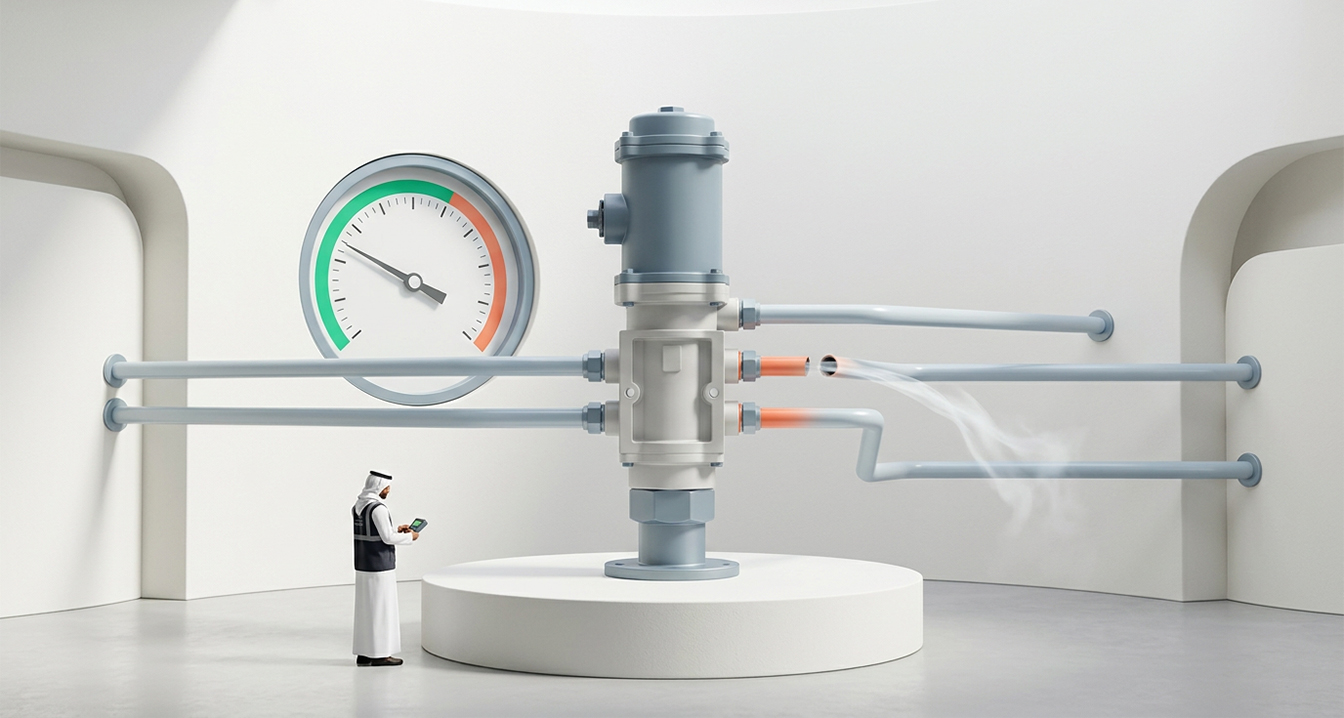
Did you know that tire pressure is the primary factor determining your safety and the safety of your passengers on the road? Yet, some drivers often neglect it, focusing instead on other parts of the car like the engine and brakes!
Imagine your car weighs over a ton, with all that weight resting on four rubber patches no larger than the palm of your hand. These patches are the only point of contact between your car and the road, and the quality of this contact depends entirely on the ideal tire pressure.
Many drivers also believe that tires only need to be inflated once, or that tire pressure remains constant throughout the year. In reality, summer and winter automatically change this pressure, even if you never touch the tire.
In this comprehensive article, we cover everything you need to know about tire pressure in summer and winter, explain the relevant physical phenomena, clarify the appropriate pressure levels for each season, and show you how to choose and use the ideal pressure gauge to ensure a safe and comfortable drive all year round.
Explaining the phenomenon of tire pressure changes between summer and winter
Why do we always need to adjust tire pressure as the seasons change? To answer this, we must first understand the rule governing this relationship: every 6°C change in ambient temperature alters tire pressure by 1 PSI (pound per square inch). This rule explains why your tires have low pressure on a cold winter morning and why the gauge reading rises significantly after an hour of driving in summer heat.
"Every 6°C change in ambient temperature alters tire pressure by 1 PSI (pound per square inch)."
The effect of heat on car tire pressure in summer
Tires face a real struggle in the summer due to direct sunlight, hot asphalt, and friction from speed—all factors that significantly increase tire temperature.
Tire pressure can increase by about 3 to 5 PSI during the first half-hour of driving before stabilizing. This expansion of air inside the tire can lead to a dangerous increase in pressure, especially if the tire was originally inflated in cold weather.
The effect of heat on car tire pressure isn't limited to high pressure alone. If the pressure is low in hot weather, friction between the tire and the road increases, causing the tire temperature to rise and weakening its internal structure. With continued low pressure, the risk of damage or a sudden blowout increases.
The effect of cold on tire pressure in winter
The exact opposite happens in winter. When the temperature drops, the air inside the tire contracts, causing the pressure to decrease. Drivers often mistake this for a tire leak, when the real cause is simply the change in weather.
A tire can lose between 1 and 2 PSI for every 10°F (about 5.5°C) drop in temperature.
For this reason, experts recommend adding about 3 PSI at the start of winter to compensate for the natural drop caused by the cold. For most cars, winter tire pressure should range between 30 and 35 PSI, taking into account the changes caused by falling temperatures.
What is the appropriate tire pressure for each season?
The answer depends on your specific vehicle, but there are general ranges you can rely on:
Tire pressure in summer
Extreme caution is required in summer, as excessively high tire pressure can lead to a blowout while driving because the air inside heats up and expands.
On the other hand, low air pressure in summer increases friction, which raises tire temperature and heightens the risk of damage.
In this case, the safe range for most cars during summer is between 30 and 35 PSI when measuring tire pressure while cold, meaning before driving or after the car has been parked for at least three hours.
Tire air pressure in winter
In winter, pressure drops automatically due to the cold; therefore, the appropriate air pressure level is slightly higher than in summer to compensate for this decrease.
Experts recommend adding about 3 PSI to the recommended value at the start of winter. The general range is between 30 and 35 PSI, though these values may vary slightly based on the vehicle type, tire size, and the actual temperature in your area.
Tire air pressure chart for all cars
To make things easier for you, here is a tire air pressure chart for all cars based on vehicle type and tire size:
In any case, you can find the ideal tire pressure for your vehicle from the manufacturer. You can usually find it on a sticker attached to the driver's door jamb, in the glove box, inside the fuel filler door, or in the owner's manual.
"The number printed on the tire is the maximum pressure the tire can withstand, not the recommended pressure. Always use the number found in the vehicle manual or on the sticker attached to the car."
Types of tire pressure gauges: Which one is best?

Types of tire pressure gauges: Which one is best?
Now that you know the appropriate air pressure level, the most important question arises: what is the best gauge for measuring tire pressure? There are three main types of gauges available on the market:
- Analog gauge
This is the traditional gauge that works with a needle indicator on a calibrated face, and it is characterized by being:
- Inexpensive and available at most gas stations.
- Durable and does not require batteries.
- Easy to use for beginners.
However, this type of gauge is relatively less accurate compared to modern digital counterparts. It becomes increasingly difficult to rely on in low-light conditions or dark environments where reading the indicator is challenging, not to mention its gradual loss of efficiency over time due to aging and repeated wear.
- Digital Gauge
This type provides a clear digital reading on an LCD screen and features:
- Very high reading accuracy.
- Easy readability in all lighting conditions.
- Additional features such as the ability to save readings or a backlit screen.
- Fast results.
Its drawbacks are that it is more expensive than an analog gauge, relies on batteries that may run out at the wrong time, and can be damaged if dropped or exposed to moisture.
- Digital Gauge with Inflator
This type combines measuring and inflating functions. You can pre-set the desired pressure, connect the gauge to the tire valve, and it will automatically inflate the tire to the specified pressure and then stop. This is the most advanced type, offering maximum convenience and accuracy while saving effort, especially if you are inflating multiple tires. However, it is the most expensive of all types and may be bulkier and less practical to carry in the car.
Which one should you choose?
If you are looking for an economical and practical option, a good analog gauge may be sufficient. If you want maximum accuracy and a clear reading, the digital gauge is the best choice. If you frequently inflate your tires yourself, a digital gauge with an inflator will save you a lot of time and effort. Regardless of the type you choose, ensure it is properly calibrated and check it periodically to verify its accuracy.
How to measure tire pressure when cold
You must measure when the tire is cold. This means the car should have been parked for at least three hours, or you have driven no more than 2 kilometers at a low speed. The best time to measure is in the morning before you start driving.
Do not measure tire pressure after long trips or high-speed driving, as the tire will be hot, and the reading will be inaccurately high.
Remove the valve cap from the tire you want to measure and press the gauge firmly onto the valve stem until you hear a slight hiss of air; this ensures the gauge is properly sealed against the valve.
Read the number displayed on the gauge, record it for each tire, and repeat the process for all four tires, including the spare tire if available.
If the reading is incorrect and the tire pressure is lower than recommended, you can add air until you reach the specified value. If the tire pressure is higher than recommended, you can release some air by gently pressing the valve until you reach the specified value.
The best time to check pressure is in the morning before you start driving, while the tires are still cold, as checking them when hot will result in an inaccurate, high reading.
Factors affecting tire air pressure
There are other factors that affect tire air pressure beyond seasonal changes that you should be aware of, most notably:
- Tire load distribution; carrying heavy loads or passengers requires increased air pressure to compensate for the extra stress. Manufacturers specify a standard pressure value and a maximum pressure value based on weight.
- Driving speed; high speeds increase friction heat inside the tire, so it is generally recommended to slightly increase pressure when driving continuously at speeds exceeding 160 km/h.
- Road conditions and terrain; the appropriate pressure for paved asphalt differs from rough terrain, and it is sometimes preferable to reduce pressure on sand or mud to increase the contact patch and improve traction.
Tips for maintaining tire air pressure throughout the year
- Checking tire pressure should be part of your monthly routine. Experts recommend checking it at least once every two weeks, especially before any long trip.
- Remember that measuring tire pressure while cold is the only way to ensure an accurate reading.
- Pay attention to weather changes. Remember that the effect of temperature on tire pressure is real and significant, and you may need to adjust your tire pressure at the start of each season.
- Do not judge tire pressure just by looking at it; modern tires can look inflated even when they are dangerously low, so always use a gauge.
- Make sure to check the integrity of the tire valves and ensure they are completely free of any air leaks. Be sure to install the valve caps, as they prevent dirt and moisture from entering the valve and maintain its efficiency.
"Correct tire air pressure improves fuel economy, extends tire life, and most importantly, saves lives."
In conclusion, experts emphasize that correct tire pressure improves fuel economy, extends tire life, and most importantly, saves lives. They recommend investing in a good tire pressure gauge and keeping it with you in your car at all times.
Check your tire pressure regularly and adjust it according to the season and driving conditions to ensure a safe and enjoyable trip, protecting your life and the lives of those with you on the road.