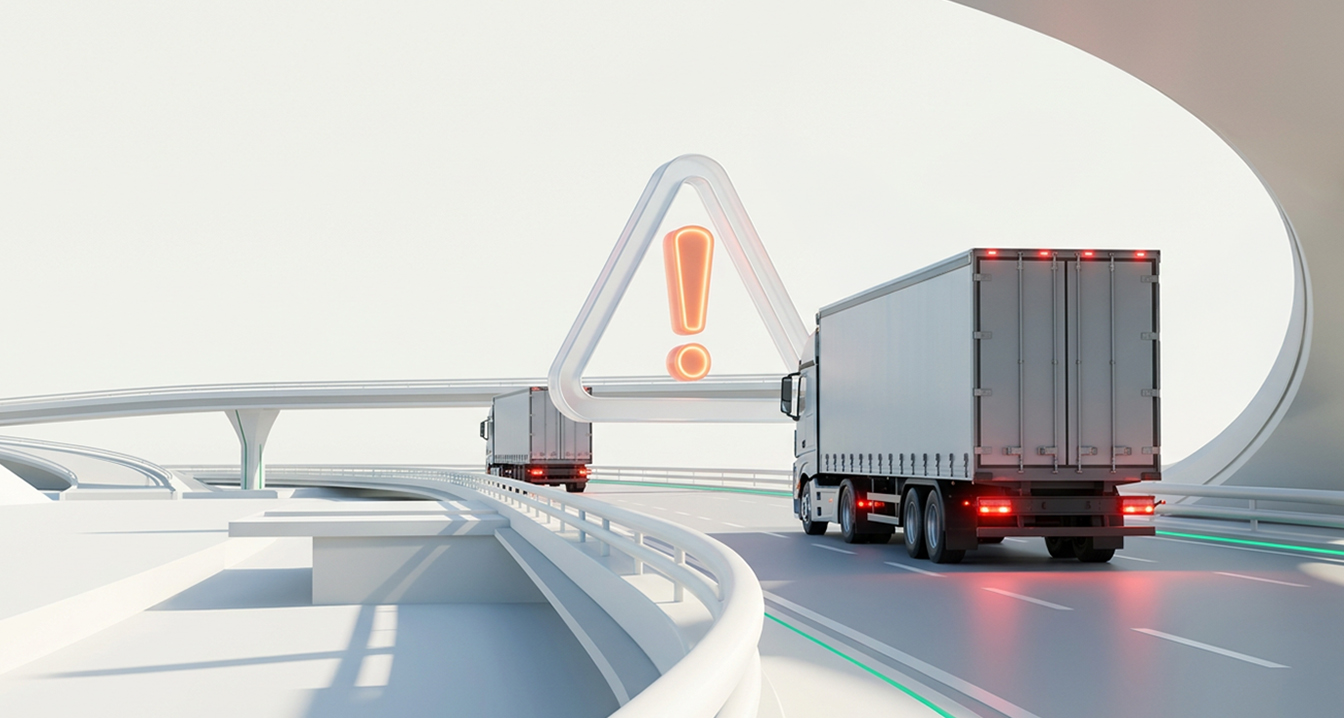
Turning errors on multi-lane roads are among the most dangerous driving practices, causing thousands of accidents annually worldwide and claiming the lives of both drivers and passengers.
Below, we will examine these errors in detail and provide practical solutions and expert tips to help you avoid them, ensuring you become a more aware and safer driver on the road.
What are multi-lane roads?
Multi-lane roads are major thoroughfares that feature two or more lanes for traffic moving in the same direction, such as highways and main city streets.
Traffic regulations govern movement on these roads by requiring drivers to stay within their lane, marked by longitudinal dashed lines, and prohibiting lane changes until the driver has assessed the road and confirmed that the maneuver can be performed safely without endangering other vehicles.
Why are turning errors on multi-lane roads so deadly?
Turning and lane-changing errors on multi-lane roads create severe risks, making them a leading cause of fatal accidents for the following reasons:
- High speeds
Multi-lane corridors feature high speed limits, which means the reaction time available to a driver is reduced to mere fractions of a second. Any misjudgment during a turn turns the vehicle into a moving mass that is difficult to control or stop suddenly.
- Obstructed visibility
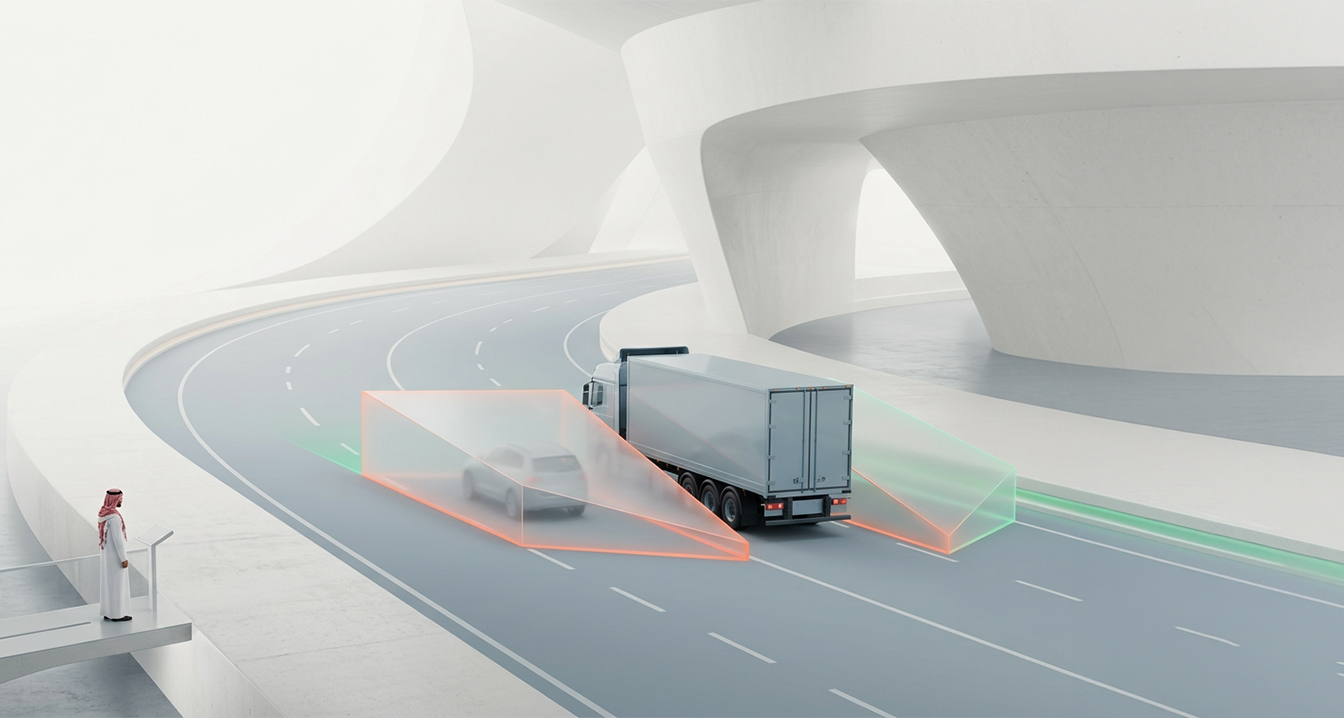
Studies show that nearly 40% of intersection accidents stem from obstructed visibility. Trucks or large vehicles in adjacent lanes create blind spots that can extend for dozens of meters, potentially leading a driver to turn based on a "guess" that the road is clear rather than a confirmed, real-time view.
- Speed differentials between lanes
Speeds vary from one lane to another. Turning across multiple lanes requires crossing paths where vehicles are traveling at different speeds, which often leads to alarming side-impact or rear-end collisions—the most dangerous types of accidents and the most frequent cause of serious injuries.
- Erratic lane changing before turning
Failing to prepare for a turn by moving gradually and early into the correct lane, and instead cutting across lanes suddenly, confuses drivers behind you and deprives them of the safe distance needed to stop.
These factors combine to minimize safety levels, making even a minor error in judging turning distance or signaling a direct cause of collisions and accidents with catastrophic results.
"These factors combine to minimize safety levels, making even a minor error in judging turning distance or signaling a direct cause of collisions and accidents with catastrophic results."
Common turning errors on multi-lane roads
Driving on multi-lane roads requires the highest levels of concentration, as the risk of collision increases with speed. Below are the most common errors made while turning that can lead to catastrophic accidents:
1. Failure to use turn signals
This is one of the most common and dangerous turning errors on multi-lane roads, as these signals are the primary means of communicating with other drivers on the road.
The Traffic Department has emphasized that failure to use turn signals when turning right or left, overtaking, or changing lanes is a traffic violation, with a fine ranging from 150 to 300 SAR.
Furthermore, failing to use turn signals prevents surrounding drivers from anticipating your movements and reacting appropriately. This increases the likelihood of direct side-impact collisions with vehicles in adjacent lanes and can cause horrific rear-end accidents due to unexpected braking or sudden turns.
This also disrupts the general flow of traffic, creating chaos and confusion for other drivers, which can escalate into multi-vehicle pileups in a matter of seconds.
"Failure to use turn signals prevents surrounding drivers from anticipating your movements and reacting appropriately, increasing the likelihood of direct side-impact collisions with vehicles in adjacent lanes."
2. Sudden lane changes
Changing lanes suddenly and without warning is one of the most dangerous turning errors on multi-lane roads. The General Directorate of Traffic has confirmed that a safe lane change requires ensuring the road is clear, using the turn signal in advance, and moving gradually into the desired lane while maintaining an appropriate speed and a safe distance from other vehicles.
Sudden lane changes do not give other drivers enough time to react, increasing the risk of side-impact collisions—especially in blind spots—and loss of vehicle control, particularly at high speeds.
3. Turning from the wrong lane
The basic rule is that when driving on a multi-lane road, you must turn left from the leftmost lane or a lane marked with a left-turn arrow, and turn right from the rightmost lane.
Turning from the wrong lane puts you at risk of colliding with vehicles in the correct lane, causing serious side-impact accidents, and confusing other drivers who expect you to turn from the designated lane.
4. Driving at high speed while turning
You may find yourself driving at high speed outside your lane and drifting into the adjacent one. High speed during a turn also leads to loss of vehicle control, increases the required stopping distance, makes it difficult to avoid obstacles or other vehicles, and increases the severity of a collision should an accident occur.
5. Ignoring blind spots
Visual obstructions occur when left-turn lanes are offset, causing vehicles in the opposing left-turn lane to block the view of an oncoming vehicle from the perspective of a driver turning left.
Ignoring blind spots can lead to collisions with unseen vehicles in adjacent lanes or serious side-impact accidents, leaving drivers unable to avoid sudden hazards.
"Visual obstructions occur when left-turn lanes are offset, causing vehicles in the opposing left-turn lane to block the view of an oncoming vehicle from the perspective of a driver turning left."
6. Failure to stay within lane markings
Drifting out of a designated lane is a direct encroachment on the safety space of neighboring vehicles and disrupts traffic flow. This has led legislators to impose a fine ranging from 300 to 500 Saudi Riyals to curb this erratic behavior.
The danger of this error is potentially fatal, as it causes unpredictable interference with vehicles in adjacent lanes, significantly increasing the risk of severe side-impact collisions. This distraction also creates tension and mental confusion for other drivers.
7. Changing lanes in turns
When turning, drivers should avoid changing lanes to prevent vehicles directly behind them from entering their blind spot, which risks collisions with vehicles in adjacent lanes, loss of vehicle control, and multi-vehicle accidents.
The impact of weather conditions on vehicle stability during turns
One common mistake drivers overlook on multi-lane roads is ignoring how weather conditions affect vehicle stability. Studies have shown that rainfall significantly reduces traction, even on gentle curves.
Research also indicates that the far-right and far-left lanes are more significantly affected by rain compared to the center lane. Therefore, driving at a moderate speed in rainy conditions is essential to avoid drifting out of your lane while turning.
Are modern technologies a magic solution?
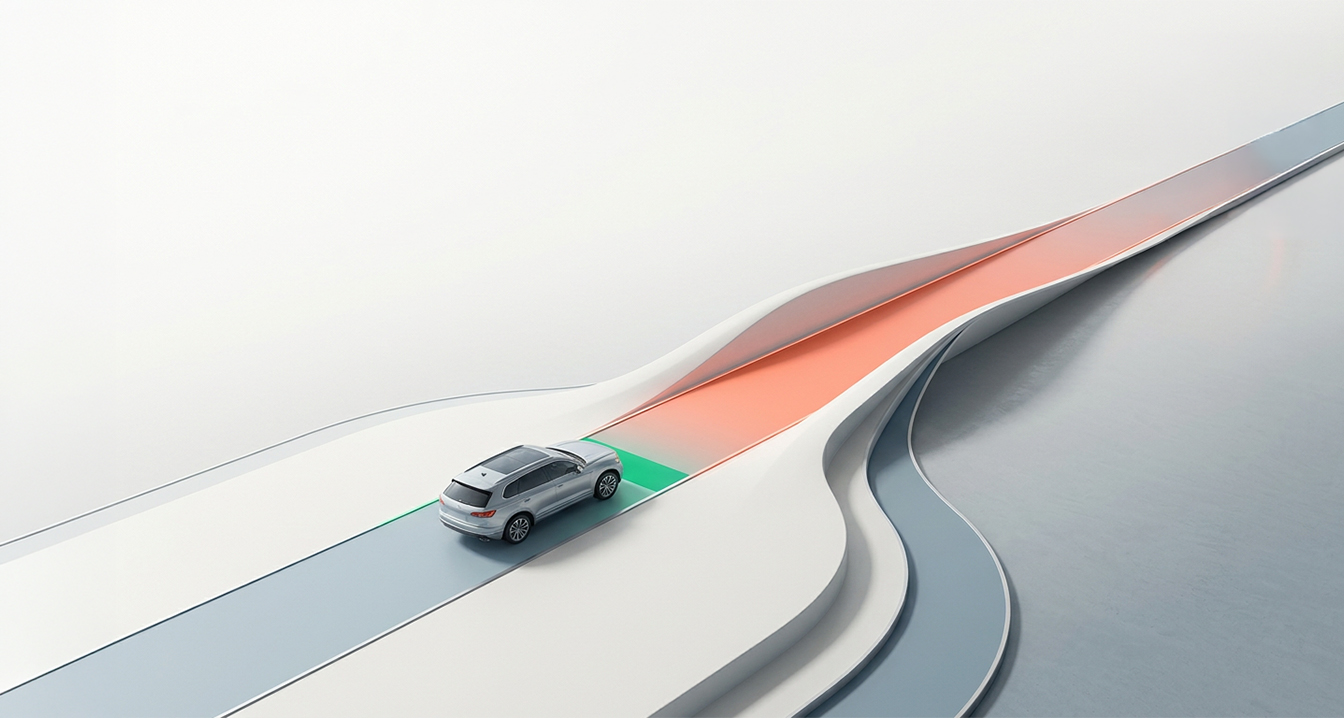
In the age of smart cars, some believe that modern systems are enough to avoid turning errors on multi-lane roads, but the reality is more complex. While Lane-Keeping Assist systems use cameras to monitor the vehicle's position and gently steer it toward the center of the lane if it drifts, they are not a substitute for safe driving and attentiveness.
There are also more advanced lane-change assist systems that anticipate a driver's intent and provide warnings to avoid imminent collisions. However, these systems remain merely assistive tools and cannot compensate for a lack of attention or human error, especially in complex situations like multi-lane roundabouts.
"These systems remain merely assistive tools and cannot compensate for a lack of attention or human error, especially in complex situations like multi-lane roundabouts."
The correct way to turn on multi-lane roads
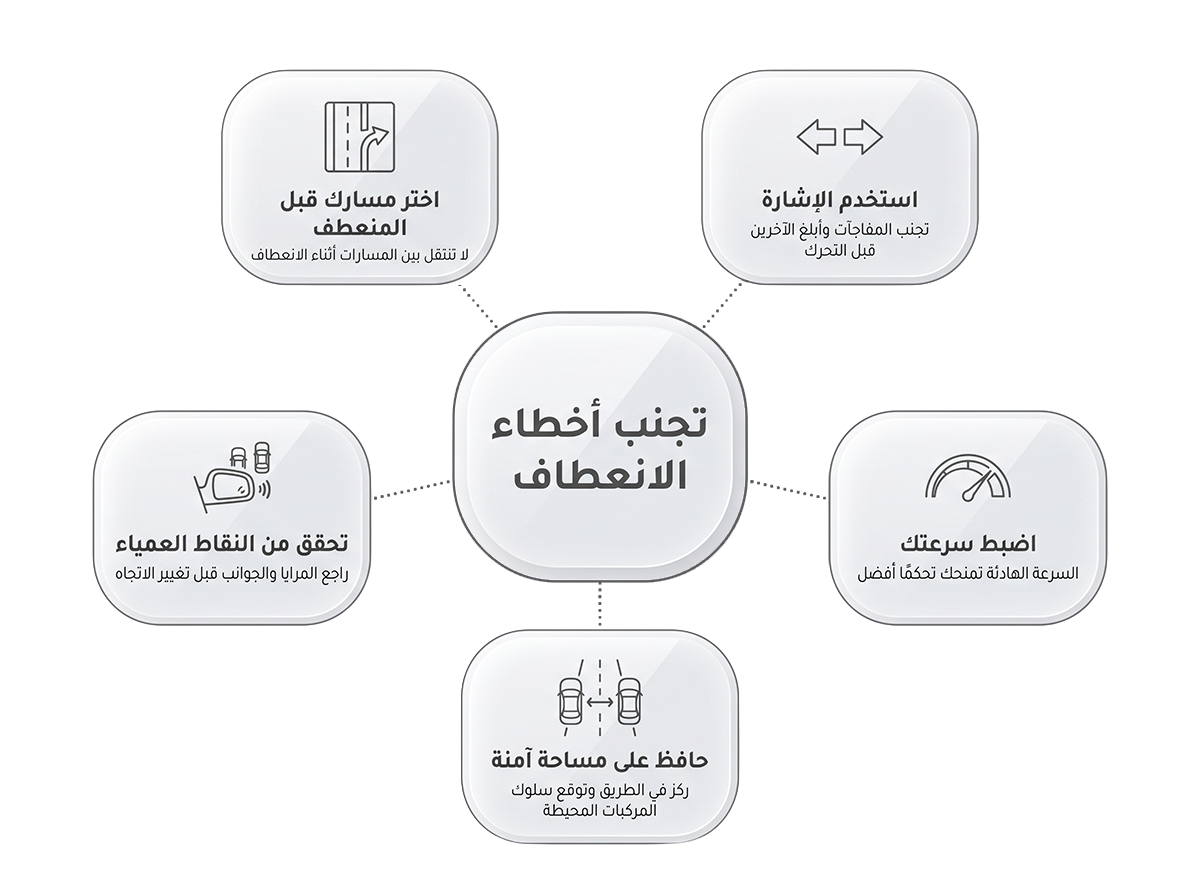
1. You must use your turn signals before turning right or left to alert other drivers on the road of your intended maneuver.
2. Plan your turn in advance, check traffic behind you, and ensure you approach the turn with sufficient time and distance from the edge of the road you intend to turn onto.
3. When turning onto a road with multiple lanes in your direction, enter the same lane you are turning from, and stay in that lane if there are multiple turn lanes for left or right turns.
4. Drive at a moderate speed when navigating turns in multi-lane situations, as lower speeds give you more time to react to potential hazards and reduce the severity of an impact in the event of an accident.
5. Look to the right when turning left, and check your mirrors and blind spots when turning right, ensuring there are no other vehicles or pedestrians before you begin your turn.
6. Stay in your lane and do not change it until you are certain that doing so will not endanger others. Remember that driving over or crossing solid longitudinal lines that separate lanes on two-way roads is prohibited.
7. Ensure there is sufficient space in the new lane before moving into it, and verify that the other lane is clear of other vehicles.
Additional tips for safe driving on multi-lane roads
1. Maintain a sufficient distance between your vehicle and the one in front of you to account for emergencies when driving at speeds over 60 km/h. This distance should increase as your speed increases.
2. Check your mirrors regularly to stay fully aware of your surroundings, which will help you anticipate the movements of other drivers and avoid surprises.
3. Do not get distracted by your phone or anything else while driving.
4. Anticipate that other drivers may make mistakes and be prepared to react accordingly.
Legal penalties for turning errors
Traffic laws specify financial penalties for traffic violations related to turning and changing lanes as follows:
Type of traffic violation
Fine amount in Saudi Riyals
Failure to use turn signals when turning
150 – 300
Sudden lane changes without signaling
150 – 300
Crossing designated lane markings
300 – 500
These financial penalties serve as a firm tool to curb improper behavior and protect the lives of road users from collisions caused by recklessness or inattention.
In conclusion,It is clear that turning errors on multi-lane roads are fatal mistakes that can claim innocent lives. Therefore, every driver must adhere to traffic rules, use turn signals, choose the correct lane, drive at a moderate speed, and check blind spots to help make roads safer for everyone.
Always remember that safe driving starts with you. Every decision you make behind the wheel can be the difference between life and death. So, take a moment to think the next time you prepare to turn on a multi-lane road, and ensure you are making the right decision.
"Always remember that safe driving starts with you, and every decision you make behind the wheel can be the difference between life and death"