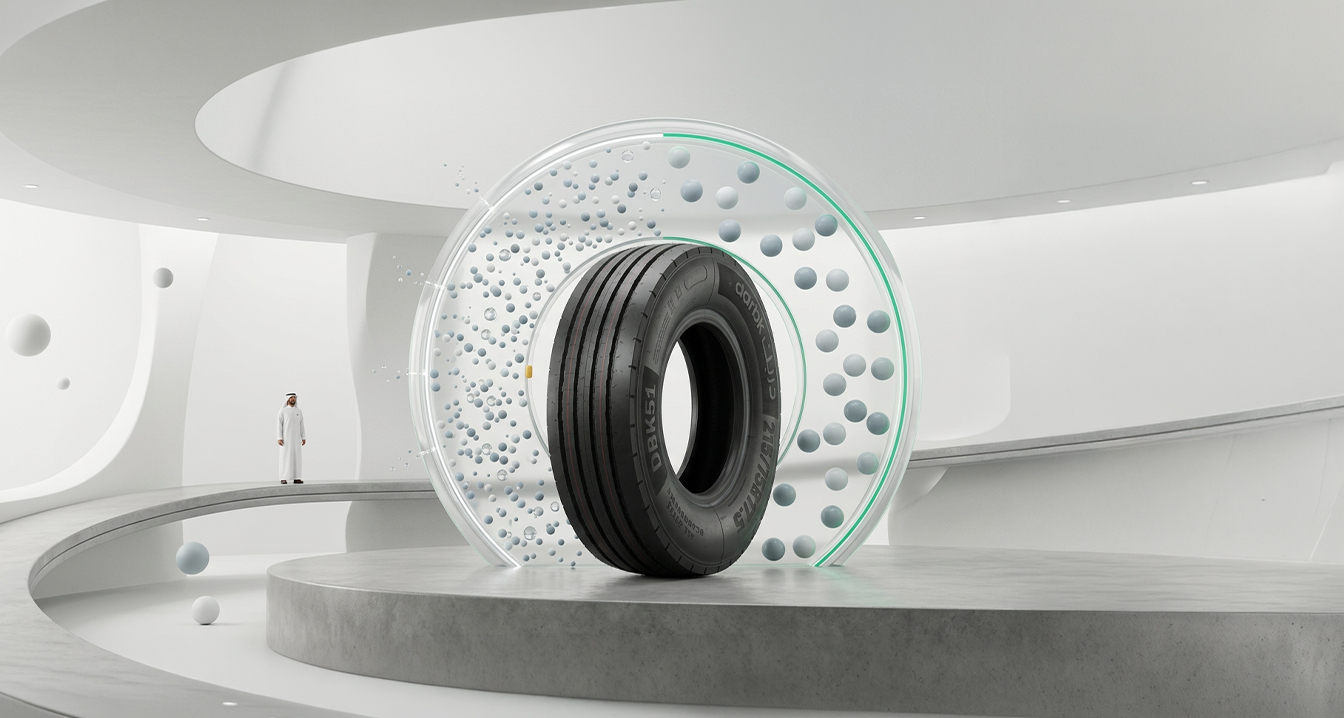
Many drivers experience daily challenges in public and private transport, especially concerning tire quality, which varies significantly between manufacturers, along with price gaps and tire lifespan in terms of efficient operation for the longest possible duration. Bus tires are considered consumable parts, and the demand for them has increased with the emergence of the public transport sector in Saudi Arabia. With the rapid development witnessed in the Kingdom after the ascension of King Salman bin Abdulaziz, progress has accelerated in developing all sectors, particularly traffic and transport. These two sectors are crucial for facilitating the most noble hospitality: hosting pilgrims to the Grand Mosque and easing their journey. This led to the establishment of Makkah Buses, one of the largest public transport systems in the world. Given the importance of this system, we will shed light on what you, as a bus company owner, bus driver, or bus passenger, need to know in the following few lines.
The Emergence of the Public Transport Sector in Saudi Arabia
Public, private, and school transport networks emerged in Saudi Arabia in the fourth decade of the last century. Significant developments in road infrastructure and the introduction of smart road maps contributed to the growth of public transport lines through passenger buses. Among the companies that spearheaded this development was Saudi Public Transport Company (SAPTCO), starting with the introduction of modern buses to Saudi Arabia and increasing passenger capacity. Aramco Transport Company and other companies also contributed to this field, accelerating the overall growth of the transport sector in Saudi Arabia, coinciding with government contributions to hosting pilgrims to the Grand Mosque. This has undoubtedly become the most famous public transport route in the entire world, and this development is set to continue with Saudi Vision 2030.
The types of buses currently in Saudi Arabia vary, leading to a diversity in the sizes and measurements of tires allocated for each type of bus. The following table will introduce the tire sizes used in the transport sector.
Table showing tire sizes by bus type:
ManufacturerBus TypeTire TypeTire SizeNotesSaudi Aramco TransportPublic Transport BusesStandard Bus Tires295/80R22.5, 315/80R22.5, 11R22.5Used for passenger transport within and between cities.Saudi Aramco TransportSchool BusesStandard Bus Tires285/70R19.5, 235/75R15, 225/75R15Used for transporting students to and from schools.Saudi Aramco TransportTourism BusesHigh-Performance Bus Tires295/80R22.5, 315/80R22.5, 11R22.5Used for transporting tourists on domestic and international trips.Saudi Aramco TransportCargo Transport BusesStandard Bus Tires, High-Performance Bus Tires315/70R22.5, 385/65R22.5, 13R22.5Used for transporting goods and merchandise between cities.Saudi Public Transport Company (SAPTCO)Public Transport BusesStandard Bus Tires295/80R22.5, 315/80R22.5, 11R22.5Used for passenger transport within and between cities.Saudi Public Transport Company (SAPTCO)School BusesStandard Bus Tires285/70R19.5, 235/75R15, 225/75R15Used for transporting students to and from schools.Saudi Public Transport Company (SAPTCO)Tourism BusesHigh-Performance Bus Tires295/80R22.5, 315/80R22.5, 11R22.5Used for transporting tourists on domestic and international trips.Saudi Public Transport Company (SAPTCO)Cargo Transport BusesStandard Bus Tires, High-Performance Bus Tires315/70R22.5, 385/65R22.5, 13R22.5Used for transporting goods and merchandise between cities.Tire Sizes
How does Saudi Arabia's climate affect bus tire performance?
Saudi Arabia is a country with an extremely challenging climate due to its surrounding desert, which naturally heats the air coming from the southeast, leading to a significant rise in temperatures. This poses a threat to vehicle tires, especially buses, as they are on the road for long periods during the day. The tire here is subjected to two intense heat sources: direct sunlight and the heat from the asphalt, which absorbs solar radiation. For this reason, many tire manufacturers have focused on providing tires that can withstand these high temperatures.
However, Saudi Arabia's environment is highly diverse; you will find snow falling in the northwestern region of the Kingdom, where temperatures can be considered very cold compared to the central and eastern areas. Therefore, as a bus driver, you need high-quality tires capable of withstanding significant temperature fluctuations, both high and low.
The best option and ideal solution for such a problem is to choose Saudi-made tires, as the saying goes, "locals know best." Saudi companies excel in manufacturing tires resistant to varying temperatures and are practically adapted to the Saudi environment. Among the leading companies today is Darbk, which has designed tires specifically for the terrain and environment of Saudi Arabia.
What are the criteria for choosing the best bus tires in Saudi Arabia?
Choosing the right tires for buses and trucks can be challenging without knowing the key factors you should keep in mind when searching for suitable tires. These are listed as follows:
Heat Resistance: Given Saudi Arabia's climatic conditions and the significant impact of fluctuating temperatures on tires, it is essential to know the temperature rating the tires can withstand. This is indicated by a symbol (Temperature: A, B, C) on the tire's sidewall. In Saudi Arabia, choose symbol A, as it means the tire can withstand temperatures above 115°.
Strength and Durability: Bus loads range between 40-80 passengers, so you need a tire that can withstand heavy weights for extended periods, along with the ability to resist damage that may occur from driving on gravel or encountering severe bumps.
Specialized Design: The tread design must be compatible with the type of roads the buses operate on. It is crucial for them to be designed for dry and hot regions to provide you with high grip on the road.
Quality Mark: On the tire tread, you often find a label indicating the tire's quality with colors graded from yellow to red, so make sure to check the quality level of the tires you have.
Economic Factors:A professional driver should view tire purchases as a sound investment for comfortable performance and long lifespan. Therefore, do not buy cheap or used tires, as saving money on tire purchases means spending money on fixing performance issues caused by poor tires.
Winter Tires or Summer Tires in Saudi Arabia?
As everyone knows, winter in Saudi Arabia passes quickly with a moderate drop in temperatures. Therefore, the best option for most citizens in Saudi Arabia is summer tires. These tires offer excellent performance year-round and are not affected by high temperatures due to the chemical compounds in the rubber, which make the tires rigid and durable as temperatures rise.
However, for residents of the northern regions, winter tires are not recommended because winter in Saudi Arabia passes quickly. As a bus driver, you cannot spend a lot of money on tires that will only be used for a few months. Winter tires cannot withstand high temperatures, causing them to crack and wear out quickly, unlike summer tires, which can handle normal temperatures and are suitable for most regions in Saudi Arabia.
What is the relationship between bus fuel consumption and tire quality?
Tire quality has a direct relationship with fuel consumption in a bus because wheel torque acts as a load on the engine. Consequently, if the tires are smoother on the road, the load on the engine significantly decreases, making driving more comfortable for both the driver and the bus engine. The following points influence fuel consumption:
Rolling Resistance: Tires with low rolling resistance significantly reduce fuel consumption because they require less effort from the engine to move the bus.
Proper Air Pressure: To reduce road resistance, tires must be set to the correct air pressure, as both over-inflation and under-inflation affect the tire's friction with the asphalt road surface.
Even Wear: Even tire wear significantly maintains the distribution of the bus's weight across the wheels, which translates to high smoothness in acceleration from a standstill.
Streamlined Design: Tires should have a tread pattern designed to be compatible with Saudi roads to reduce friction with the road surface and enhance the bus's aerodynamic dynamics, thereby facilitating the bus's movement on the road.
Proper Pressure for Bus Tires
- AThe proper pressure Bus tires are a crucial component for maintaining driving efficiency and passenger safety, directly impacting fuel consumption and performance quality during transit.
- Overinflation This leads to increased tire rigidity, which reduces the contact patch with the road and negatively affects stability.
- Underinflation This increases rolling resistance and causes the tire to overheat during operation, which can lead to internal damage or a sudden blowout.
Therefore, it's important to regularly check tire pressure using a reliable gauge, especially at the start of the day or before long journeys. It is always advisable to refer to the bus manufacturer's instructions for the ideal pressure for each tire, depending on the load, road type, and operating conditions.
How effective are low-noise tires?
Low-noise tires are a key component for many buses operating within cities and on main transport routes because noise around and inside the bus cabin, generated by the friction of tires on the road, creates an annoying sound and reduces the quality of the passenger experience inside the bus.
How do low-noise tires work?
Low-noise tires utilize modern technologies based on the tire's external design and internal structure, which are as follows:
Tread Design: The tread design in low-noise tires relies on distributing grooves in a way that helps absorb the maximum amount of noise generated by the tire's contact with the road.
Internal Composition: Layers of noise-absorbing materials are added to prevent noise from reverberating into the wheel structure or bus chassis.
Pros and Cons of Low-Noise Tires
While low-noise tires offer many appealing advantages such as driving comfort, enhanced safety, and reduced disturbance for local residents, their drawbacks can be a deal-breaker for many bus drivers due to their high cost, faster wear compared to regular tires, and other technical challenges, including balancing noise reduction with high road performance. However, the ongoing development in modern tire technology offers great promise, and Saudi Arabia, with its continuous vision, could secure a significant share of this anticipated development in the coming days and years.
New or Used Bus Tires: Which is Better?
:Choosing between new and used tires depends on several factors, including budget and type of use.
- New Tires They ensure consistent performance and known manufacturing quality, often coming with a warranty covering manufacturing defects. They also provide optimal road grip and high reliability in various conditions.
- However, Used Tires they are an economical option, but they require a thorough inspection, including tread depth, sidewall integrity, and the absence of previous repair marks or visible cracks.
It is advisable not to purchase used tires from unreliable sources. It is also crucial to verify the production date and proper storage, as the age of a tire significantly impacts performance, even if it hasn't been used. Generally, new tires are the best option for daily use and long distances, while used ones can be a temporary solution if they are in good condition and have been carefully inspected.
How to Become a Bus or Truck Driver in Saudi Arabia?

The Kingdom of Saudi Arabia is experiencing a technological and logistical boom in its public and private transport sector, particularly with bus projects that have expanded from various regions to now cover most areas, including Riyadh, Jeddah, Al-Qassim, Jazan, Makkah, and the Eastern Province, effectively connecting distant locations. This has made remote areas accessible, eliminating transportation difficulties within Saudi Arabia through public transport, often with a single ticket costing no more than ten riyals. Consequently, the demand for bus drivers has surged, especially as some companies in the Kingdom now operate up to eight thousand public and private buses for passenger transport. This indicates sustained growth in the sector and an ongoing need for drivers. To become a bus driver in Saudi Arabia, you must be aware of the following information, which applies to both bus and truck drivers:
Terms You Should Know
These terms apply to drivers in general, but bus and truck drivers must have a complete understanding of them, as many laws and violations are related to the following terms we will mention:
Driver: The natural person authorized to drive a bus or truck.
Periodic Technical Inspection Certificate: A certificate issued by a technical inspection center licensed by the Traffic Department to conduct a comprehensive technical inspection of the vehicle and issue a document confirming the vehicle's compliance with inspection requirements.
Single Cargo Vehicle: A single, self-propelled vehicle designed for transporting goods on roads.
Tractor Unit: It is a truck head (equipped with a fifth wheel coupling) designed to tow a semi-trailer and not designed to carry loads other than the portion of the semi-trailer's weight resting on it.
Semi-trailer: A transport vehicle designed to couple with a tractor unit via a fifth wheel, with part of its weight resting on the tractor unit.
The Trailer: A transport vehicle designed such that no essential part of its weight rests on the tractor unit or the solo freight vehicle.
Transport Vehicle: A solo freight vehicle, tractor unit, trailer, or semi-trailer.
The Truck: Any solo freight vehicle, a solo freight vehicle towing a trailer, a tractor unit with a semi-trailer, or any other permissible road configuration used for transporting goods.
Goods: What the carrier or freight forwarder is obligated to transport from a sender to a consignee under a transport contract, including materials, equipment, goods, animals, or other items not prohibited in the Kingdom of Saudi Arabia.
General Conditions for Driver Acceptance
Firstly: The applicant for a bus driver position must be free from chronic diseases associated with loss of consciousness, epilepsy, and neurological problems.
Secondly: Immediately cease work if suffering from any medical condition that fully prevents the driver from completing driving tasks, such as fractures, wounds, or surgical operations.
Thirdly: Obtain a truck driving license, which can be acquired from the relevant authorities in traffic departments, provided it is internationally or domestically accredited in Saudi Arabia.
Fourthly: Obtain a professional driver's card from a vocational training center (refer to Part 11 of the Drivers' Manual).
Fifthly: Reviewing and understanding the safety guidelines approved by the General Transport Authority, and staying in continuous contact with the Authority to keep abreast of all new guidelines and information.
Essential Skills for Drivers
As a bus or truck driver, you are entrusted with the safety of passengers and clients. It is therefore essential that you possess the necessary skills for safe and efficient driving to avoid delays, traffic accidents, and violations. Strive to develop the following skills while driving:
- High Concentration: Working as a professional driver places a significant responsibility on your shoulders. Therefore, you must maintain the highest level of concentration and avoid any distractions, such as your mobile phone, that could divert your attention from the road. You face two choices: either drive safely and complete your task, or risk a disaster that could lead to loss of life and property.
- Driver Readiness: The human body adapts to specific sleep patterns and periods of peak activity. Therefore, try to schedule your working hours during times when you are naturally most alert, and avoid working during your usual sleep times, as this will lead to drowsiness throughout your shift.
- Medications: Many medications, including allergy medications, can cause drowsiness or dizziness. Therefore, ensure you do not take any medication that induces drowsiness or dizziness before driving your bus.
- Avoid Stimulants: Excessive stimulants will not provide new energy; they will only keep you awake for longer. Therefore, avoid taking any stimulant drugs, as they create a false sense of alertness without genuine focus.
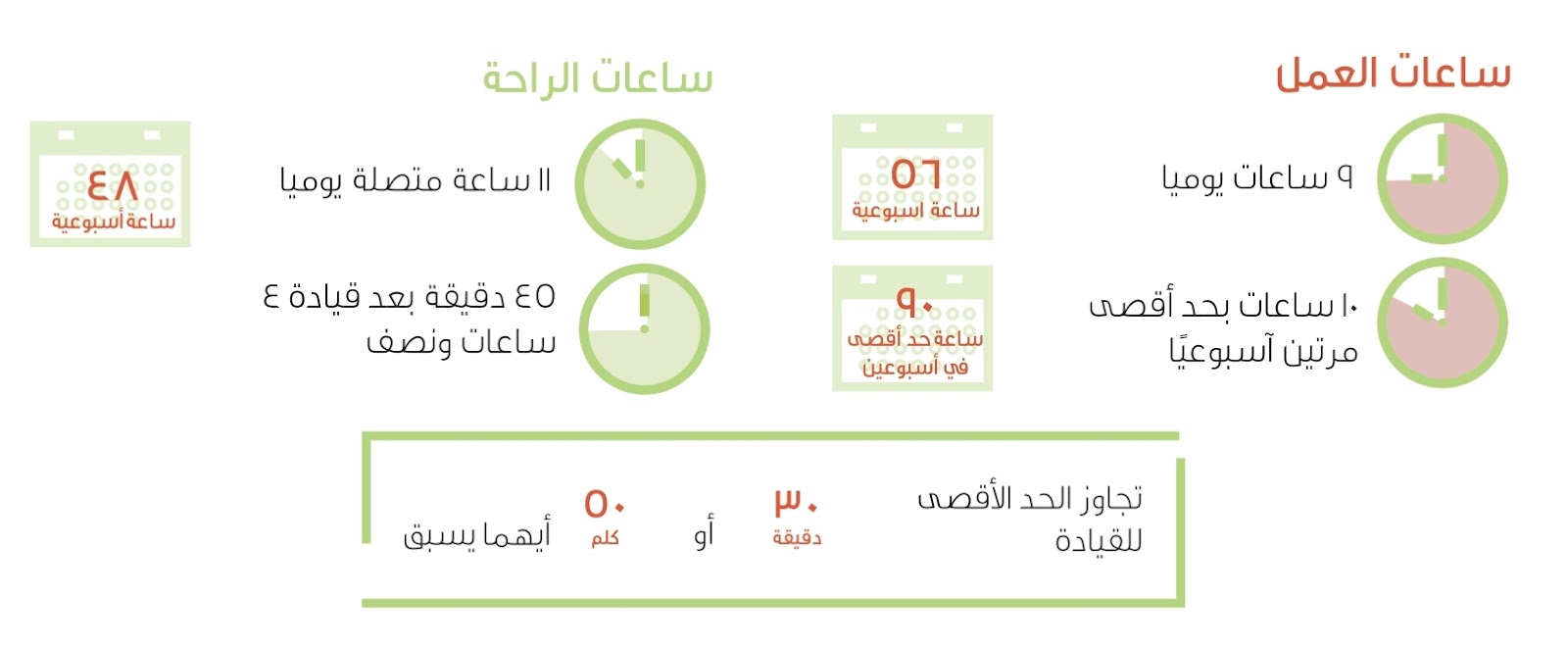
- Rest Periods: Take short breaks to refresh yourself and avoid forcing yourself to work when fatigued. The law also mandates that drivers adhere to specific work and rest periods, as follows: (According to the regulations governing freight transport activities in the Kingdom of Saudi Arabia:
- You may drive for a maximum of nine hours within a 24-hour period, which can be extended to a maximum of ten hours only twice a week.
- The maximum weekly driving limit is 56 hours, and no more than 90 hours over two consecutive weeks.
- You must take a 45-minute break after every four and a half hours of driving.
- The daily rest period must be at least eleven consecutive hours from the end of the previous rest period.
- You must adhere to daily and weekly driving and rest hours, regardless of the number of trucks you are authorized to drive).
- Mind Your Diet: Ensure you eat your meals at regular times and that they are rich in fruits and vegetables, as these help reduce hunger. Avoid heavy, fatty meals.
- Keep yourself comfortable: While in the cockpit and behind the wheel, ensure you are comfortable. Proper seating and back support will help you drive without straining your shoulders and back.
How to inspect truck or bus tires?
Bus and truck drivers must know the correct tire inspection procedures to determine if they are safe for long journeys. The driver's responsibilities for checking tire efficiency include the following inspection steps:
- Visually inspect tire surfaces for any wear or damage.
- Poorly manufactured tires can lead to a loss of steering control.
- If you find any damage or bulges in the tires, do not drive the vehicle until the issue is resolved.
- Ensure the tire size matches the single axle.
- For dual tires, ensure there is no contact between the two tires. For single tires, ensure there is no contact with the vehicle body.
Bus tire wear indicator
The wear indicator is a built-in mark in the tire's design that helps assess its wear. It appears as small transverse lines within the grooves. When the tire surface becomes flush with these marks, it signifies that the tire has reached the end of its service life and must be replaced.
Ignoring these indicators puts the bus at risk of skidding, especially on wet roads or during sudden stops. It's crucial to regularly monitor these indicators and avoid using worn-out tires, even if they appear fine externally. The remaining tread depth is what truly determines the tire's performance in various conditions, such as rain, inclines, or long distances.
Tips for safe driving on Saudi roads.
Drivers are advised to adhere to Saudi Arabian traffic rules and regulations to ensure safety, protect property, and uphold citizens' rights. To achieve this, bus and truck drivers should focus on the following points:
Know your vehicle: Drivers must be aware of their vehicle's height, width, and maximum load capacity, both by weight and passenger count. They must not exceed the permissible load limit.
Plan your trip: Plan every trip, ensuring you have adequate time to reach your destination. Additionally, confirm your vehicle is mechanically ready for the journey through a comprehensive daily inspection.
The danger of speeding: Be aware that 80% of road accidents occur due to not adhering to the speed limit and not considering weather conditions; rain and floods necessitate reducing your vehicle's speed.
Your Responsibility: A professional driver should operate their vehicle as if they are the only professional driver on the road, not expecting other road users to be faultless. Therefore, they must exercise caution, anticipate significant errors from other drivers, and never neglect to maintain a safe following distance.
Stopping Distance: You need to know the necessary stopping distance for a bus or truck from its current speed. The following table will show you the estimated stopping distance for your vehicle:
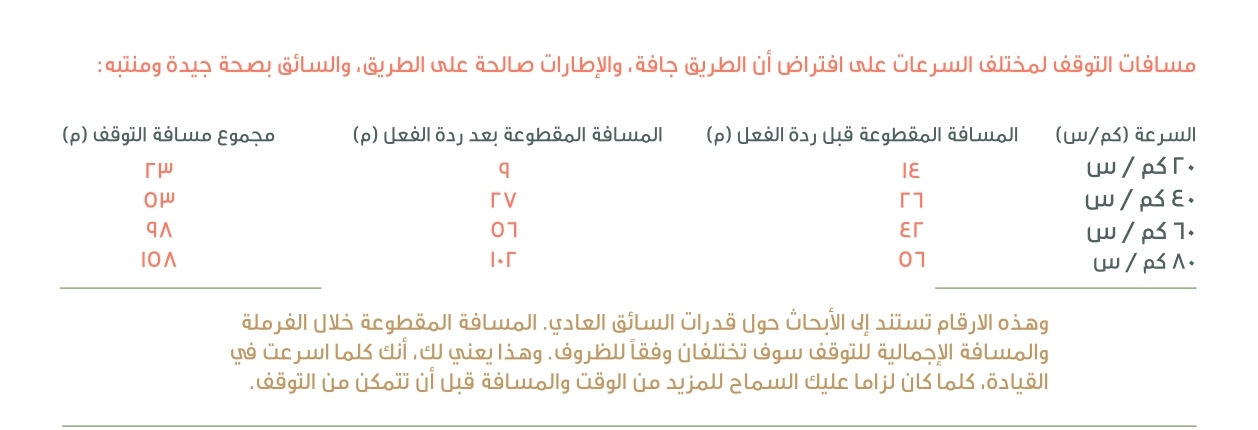
Speed (km/h)Reaction Distance (m)Braking Distance (m)Stopping Distance (m)20 km/h14 meters 9 meters23 meters40 km/h26 meters 27 meters53 meters60 km/h42 meters56 meters98 meters80 km/h56 meters102 meters158 metersStopping Distances
Best Bus Tire Brands in Saudi Arabia
Undoubtedly, Saudi tires are the most suitable for Saudi weather conditions, as they are specifically designed for them. Among the rising companies in the tire manufacturing sector in the Kingdom of Saudi Arabia is دربك which strives to provide all types of tires for trucks and vehicles, covering all available varieties in Saudi Arabia. This is especially true as the raw materials and basic components comply with Saudi standard specifications, resulting in unparalleled high safety and smooth driving.