You may need to change lanes while driving, whether in busy cities or on highways. Although this maneuver may seem simple, it can pose serious risks if not performed according to the correct rules. Statistics show that improper lane changing is a leading cause of traffic accidents, especially side-impact collisions that can result in significant human and material losses.
In this article, we review in detail the most important situations where changing lanes becomes an absolute necessity, while clarifying the safe steps to follow, common mistakes drivers make, and the legal penalties for traffic violations related to lane changing.
The Importance of Changing Lanes
Changing lanes refers to moving from one lane to an adjacent lane on the same road, whether to the right or left. This maneuver is an integral part of daily driving, as drivers need to change lanes for various reasons related to safety, compliance with traffic rules, or reaching their destination.
Safe lane changing contributes to maintaining smooth traffic flow, reducing side-impact accidents, and protecting the lives of road users, including drivers, passengers, and pedestrians. Traffic authorities have emphasized that reckless overtaking and lane changing without observing safety principles expose road users to the risk of direct collisions.
Changing lanes while driving is also a responsible driving behavior that requires full awareness of the surrounding environment, accurate assessment of speed and distance, and proper use of turn signals and mirrors.
"Changing lanes is the act of moving from one lane to an adjacent lane on the same road, whether to the right or left. It is an integral part of daily driving that requires an accurate assessment of speed and distance."
Key Situations That Require Changing Lanes While Driving
- Avoiding Obstacles and Road Hazards
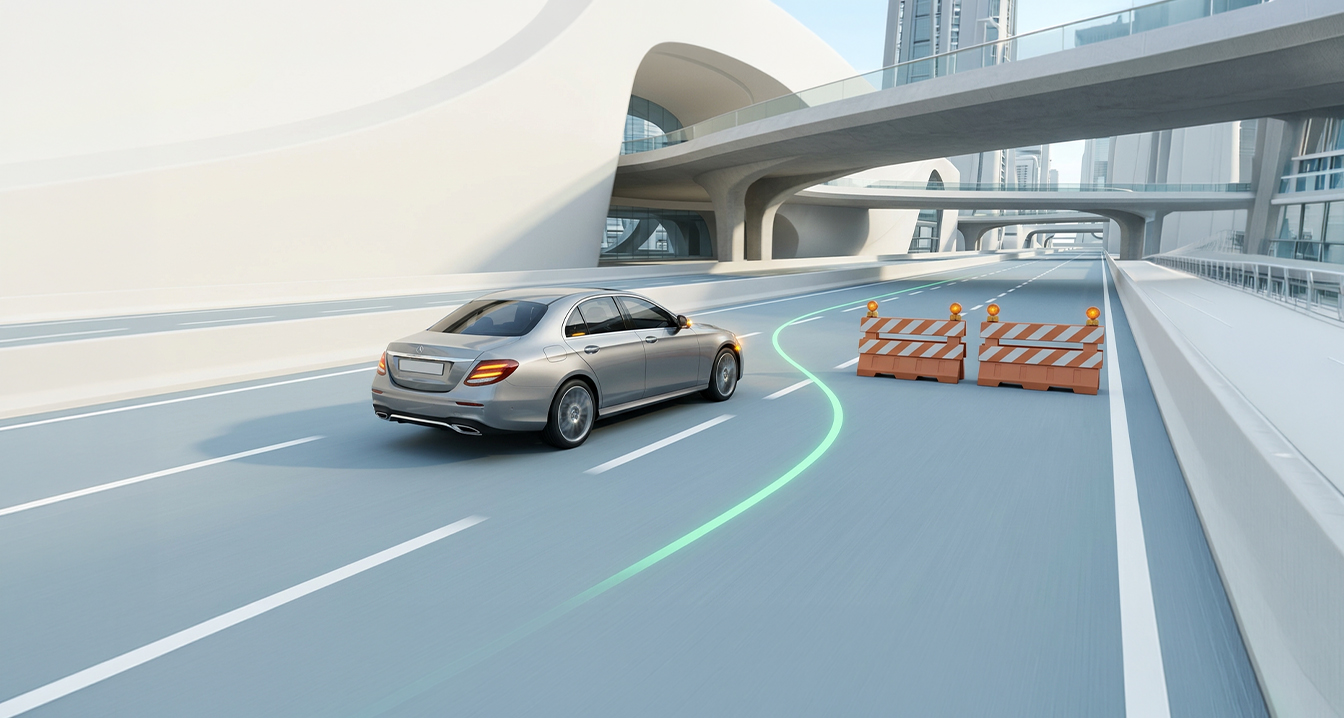
One of the most common situations that require changing lanes while driving is the presence of obstacles on the road that prevent safe travel in the current lane. These obstacles include:
1. Vehicles that stop suddenly in your lane or are parked on the side of the road.
2. Maintenance and construction work that requires closing certain lanes and diverting traffic to alternative lanes.
3. Traffic accidents, which require changing lanes to avoid the scene and help facilitate the arrival of emergency teams.
4. Foreign objects that may fall from vehicles, or the presence of sudden potholes or speed bumps that require moving to a safer lane.
- Preparing to Turn or Exit the Road
Another situation is the need to move into the correct lane before turning right or left, or before exiting a highway. A driver intending to turn right must move to the right lane well before reaching the intersection, and the same applies to turning left.
This is perhaps one of the most common situations where drivers make mistakes, as some change lanes at the last minute in front of an intersection or highway exit, putting themselves and others at great risk. Traffic authorities have recommended the necessity of planning your route in advance and choosing the correct lane early on.
- Overtaking Slow Vehicles
This is a legitimate reason to change lanes while driving, especially when a vehicle in front of you is traveling significantly slower than the speed limit. In such cases, moving to another lane to pass becomes necessary to maintain traffic flow.
Passing in this situation requires extreme caution. You must ensure the adjacent lane is clear of oncoming vehicles and that there is sufficient distance to complete the maneuver safely before returning to your original lane.
Compliance with Traffic Signals and Road Signs
Sometimes, traffic signals and road signs require a driver to change lanes. For example, there may be a lane dedicated only to turning, a lane for slow-moving vehicles, or a lane closed for maintenance. In such cases, changing lanes while driving is mandatory, not optional.
Road markings, such as arrows painted on the surface, also dictate the direction of each lane. Drivers must follow these arrows and choose the appropriate lane for their destination before reaching an intersection. Traffic regulations state that if a road is divided into multiple lanes, a driver must stay in their current lane and may not change lanes until they are certain it will not pose a risk to others.
- Yielding to Emergency Vehicles
Drivers must yield to emergency vehicles, such as ambulances, fire trucks, or police cars, when hearing sirens or seeing flashing lights by moving to an adjacent lane to allow them to pass.
- Merging into Traffic When Entering a Highway
When entering a highway from an entrance or ramp, a driver must merge with oncoming traffic. This process requires changing lanes to move from the acceleration lane to the main highway. In this situation, the driver must adjust their speed to match the flow of traffic on the highway and wait for a suitable gap to merge safely.
- Changing Lanes at the End of a Lane
In this case, the driver must move to the adjacent lane before their current lane ends, while giving priority to vehicles already in the lane they wish to enter.
"Driving requires changing lanes in emergencies when encountering obstacles such as accidents, debris, potholes, road work, or stalled vehicles, to ensure safety and avoid collisions."
- The Impact of Weather Conditions
The decision to change lanes is also directly influenced by surrounding weather conditions. Recent published studies have shown that poor weather significantly impacts driving safety and increases road accidents, and that lane-change decisions in adverse conditions are complex due to the interplay of multiple factors.
The study concluded that using improved models for lane changing in poor weather can reduce collision risks by up to 12.7% and improve the success rate of maneuvers by 16.9%.
Research findings also indicate that drivers adjust their driving behavior in response to weather by reducing speed and increasing following distances. However, their ability to maneuver decreases significantly in rain or fog. This means that changing lanes while driving in rainy conditions requires greater safety distances and more time to execute the maneuver, while ensuring that the tires are capable of providing sufficient grip on wet roads.
"Adverse weather conditions affect the safety of changing lanes while driving, as a driver's ability to maneuver decreases in rain and fog, requiring greater safety distances and more time to execute the maneuver, while ensuring the tires can maintain grip on wet roads."
"Darbak" Tips for Safely Changing Lanes While Driving
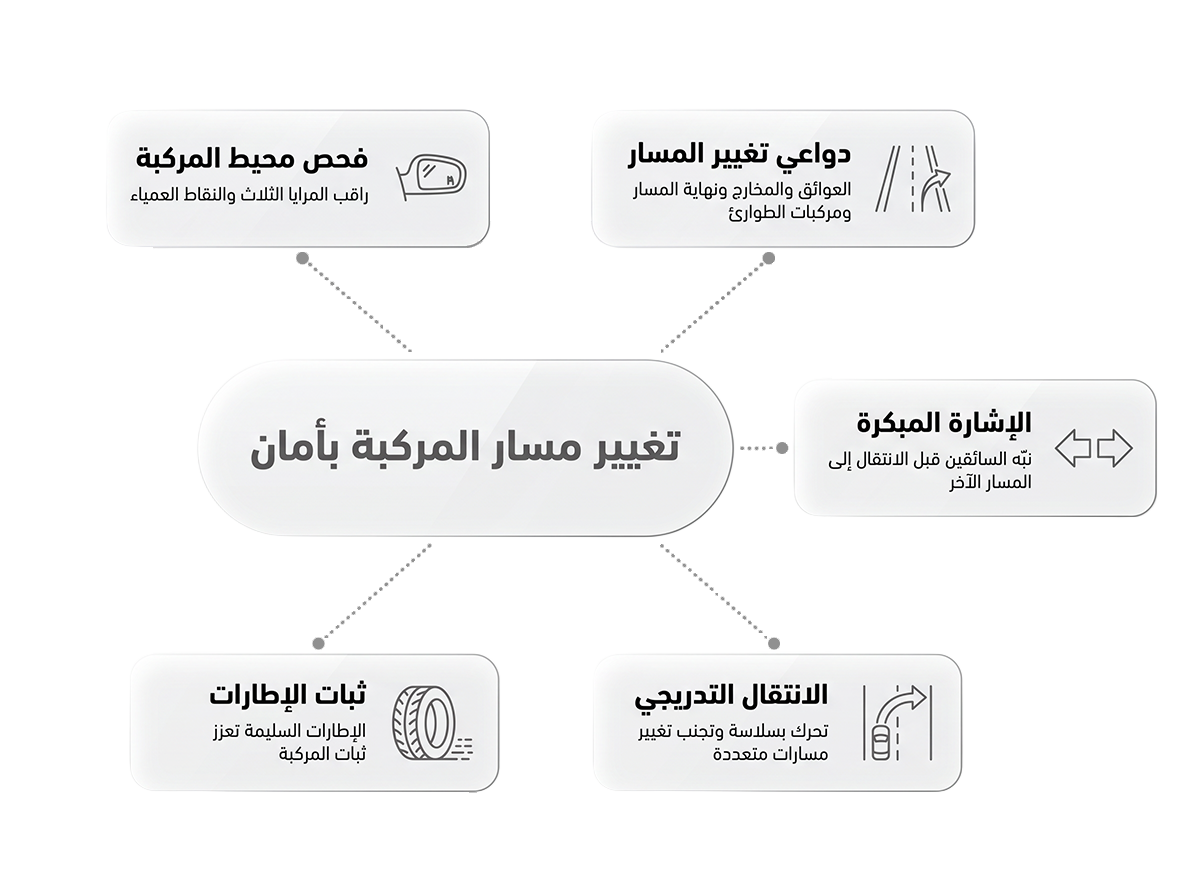
Whatever the reason for changing lanes while driving, a set of essential steps should be followed to ensure this maneuver is performed safely. These are detailed below:
1. Check that the lane you intend to move into is clear of any vehicles, especially in your blind spots—the areas around the vehicle that cannot be seen in the mirrors.
2. Turn on your signal before changing lanes or turning right or left with sufficient time—at least 3 seconds before starting the maneuver—to alert other drivers of your intention to move.
3. Monitor all three mirrors (the rearview mirror and both side mirrors) to assess the speed and distance of vehicles approaching from behind. Try to adjust your side mirrors to cover as much of your blind spots as possible before you start driving.
4. Move into the new lane smoothly and gradually, while maintaining an appropriate speed and leaving a safe distance from other vehicles.
"Safe lane changing is achieved through four basic steps: checking mirrors and blind spots, signaling 3 seconds in advance, ensuring the road is clear, and then moving gradually while maintaining speed and a safe following distance."
Most Common Mistakes When Changing Lanes While Driving
Despite the clear rules and steps that should be followed, there are many common mistakes drivers make when changing lanes, most notably:
1. Failing to use turn signals and relying on your ability to maneuver without informing others of your intentions. This behavior violates traffic rules and puts everyone's life at risk.
2. Waiting until the last moment to change lanes, especially before intersections and highway exits. This behavior does not give other drivers enough time to react and can lead to sudden collisions.
3. Relying entirely on mirrors without checking over your shoulder. This is a critical mistake, as there are always areas that mirrors do not cover. Failing to check these blind spots can lead to dangerous side-impact collisions.
4. Changing lanes at intersections, especially when there are "blind spots" that block the view of adjacent vehicles and distract drivers who are usually focused on traffic lights and cars coming from other directions.
5. Crossing more than one lane in a single maneuver. Changing lanes while driving requires moving from one lane to only one adjacent lane at a time, ensuring each lane is clear before moving into it.
The Impact of Psychological and Behavioral Factors on Lane Changing
Psychological and behavioral factors are often overlooked when analyzing traffic accidents. Some studies have revealed that a driver's stable personality traits serve as key indicators of their tendency to change lanes; high levels of aggression lead to an increased likelihood of frequent lane changes, while safe driving traits reduce this probability.
These studies also found that a driver's negative psychological state affects the decision to change lanes in different ways depending on the type of traffic obstacle. For example, a negative psychological state increases the likelihood of changing lanes when encountering slow passenger vehicles, while the same state reduces this likelihood when encountering heavy trucks. Drivers tend to adopt more cautious behavior behind trucks due to their large size and the obstruction of vision they cause, which confirms that changing lanes is a behavior influenced by the driver's personality, psychological state, and environmental conditions.
ConclusionChanging lanes while driving is a daily maneuver that requires full awareness and a good understanding of traffic safety rules. In this article, we have reviewed how to change lanes safely by avoiding obstacles and hazards, preparing to turn, complying with traffic signals, yielding to emergency vehicles, and merging with traffic.
We have also clarified the four basic steps for changing lanes safely: ensuring it is possible to pass, using turn signals, using mirrors, and moving gradually, while warning against common mistakes that can turn this simple maneuver into a real disaster.
Finally, we must emphasize the importance of the vehicle's technical condition, especially the tires. A worn or improperly inflated tire reduces the car's grip on the road, increases braking distance, and raises the risk of skidding during sudden maneuvers, making lane changes more dangerous, especially on highways or in rainy weather.
The technical condition of a vehicle—especially the tires—is a critical factor in the safety of changing lanes. Damaged or under-inflated tires reduce traction and increase the risk of skidding, which makes it essential to periodically check tire pressure and tread depth before driving.
For this reason, safety experts recommend periodic tire inspections and verifying proper tread depth and pressure before setting off. In this context, you can contact us for assistance and to meet your needs, or browse our articles which serve as a useful resource if you are looking for suitable tires that enhance vehicle stability and improve handling while driving.
In any case, adhering to traffic rules, using turn signals, and checking blind spots ensures everyone's safety on the road, especially when you fully realize that driving a vehicle is not just a skill, but a legal and ethical responsibility toward yourself and others.