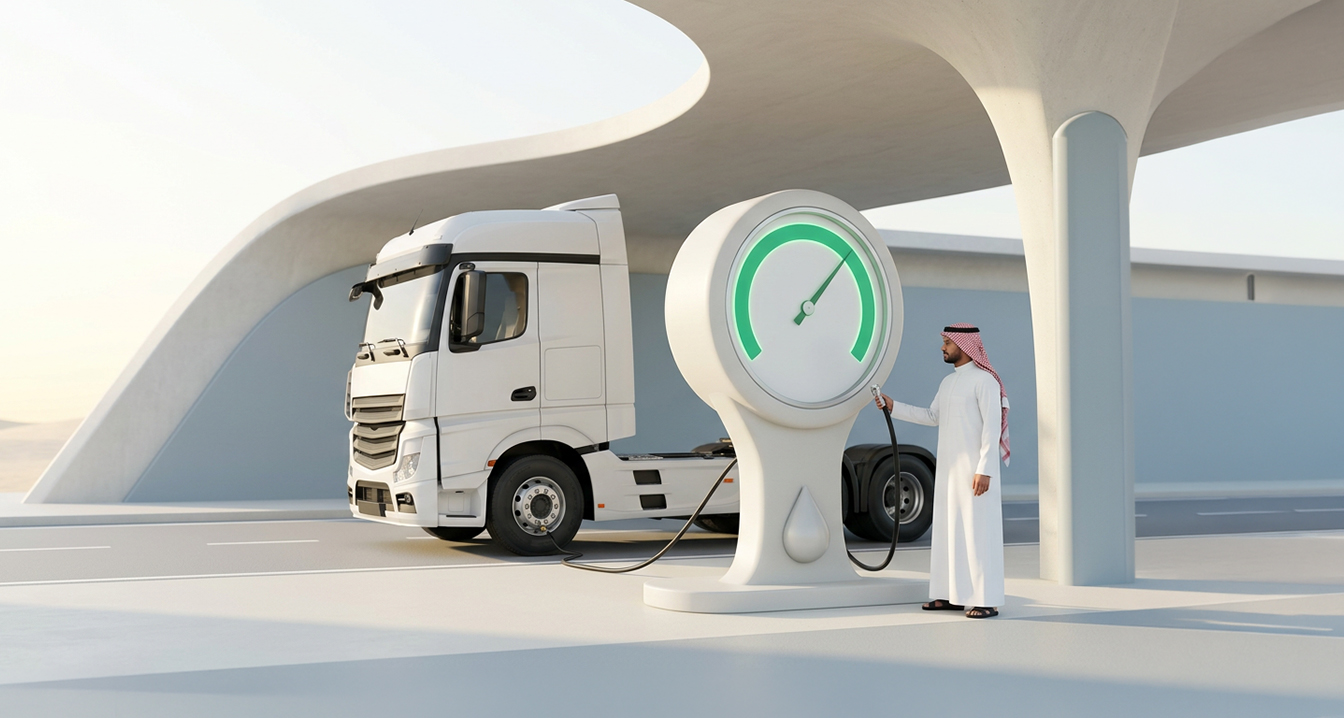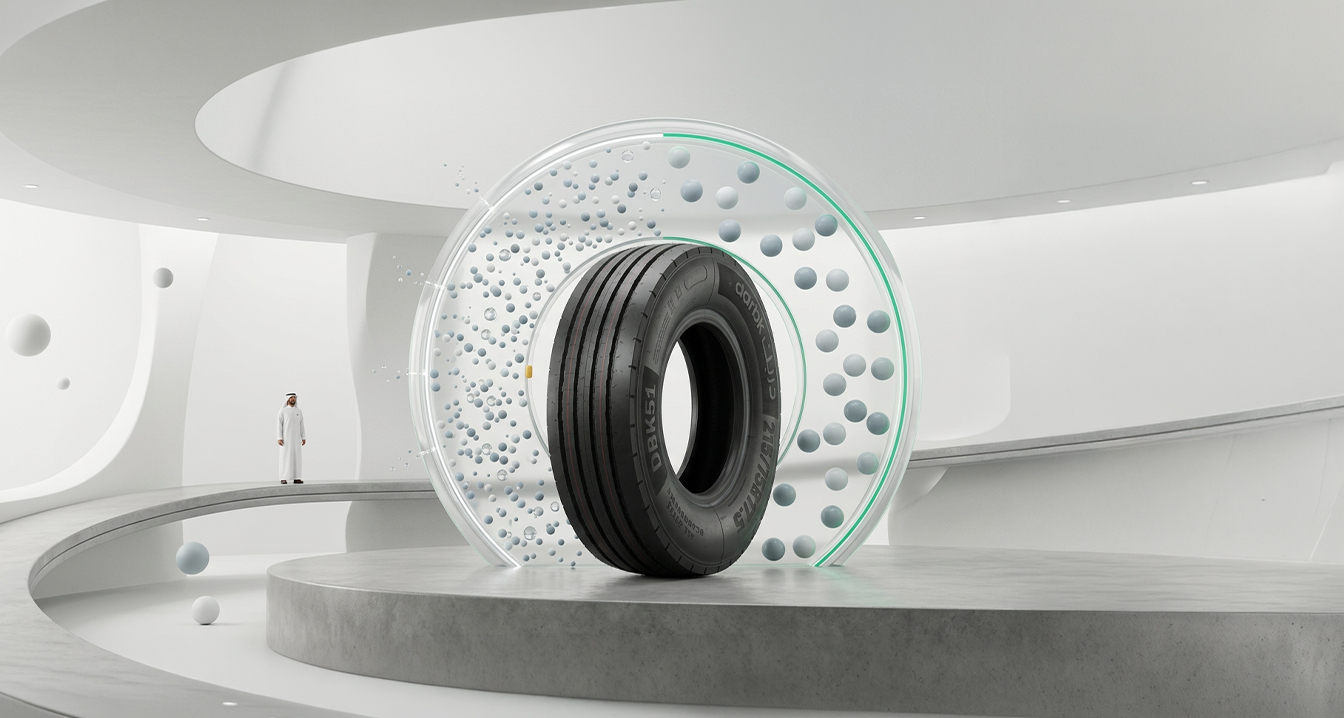
Which is better for tires: air or nitrogen? This is a question frequently asked by drivers in Saudi Arabia and across the Arab world, especially with rising summer temperatures and the growing discussion around the benefits of filling tires with nitrogen gas.
In this article, we provide a comprehensive, science-based answer backed by reliable studies from international authorities to reveal the full truth about this topic.
"Which is better for tires: air or nitrogen? The answer depends on your needs and driving conditions."
Why does this question spark so much debate?
Before we dive into the scientific details, let’s first agree on a fundamental fact: the air we breathe is already composed of about 78% nitrogen, 21% oxygen, and 1% other gases and water vapor.
As for the nitrogen used to fill tires, it is a pure gas with a purity level of 93-95%, sometimes reaching 99% at specialized stations.
It is clear from the above that the difference between air and nitrogen lies in the level of purity and the absence of moisture and oxygen. This slight difference in composition is what fuels the debate over which is better for tires: air or nitrogen.
"The air we breathe already contains 78% nitrogen, but the real difference lies in the gas's purity and lack of moisture, not just the presence of nitrogen itself."
The scientific difference between air and nitrogen in tires
To understand which is better for tires—air or nitrogen—we must first look at the physical and chemical properties of each:
- Molecular size and leakage rate
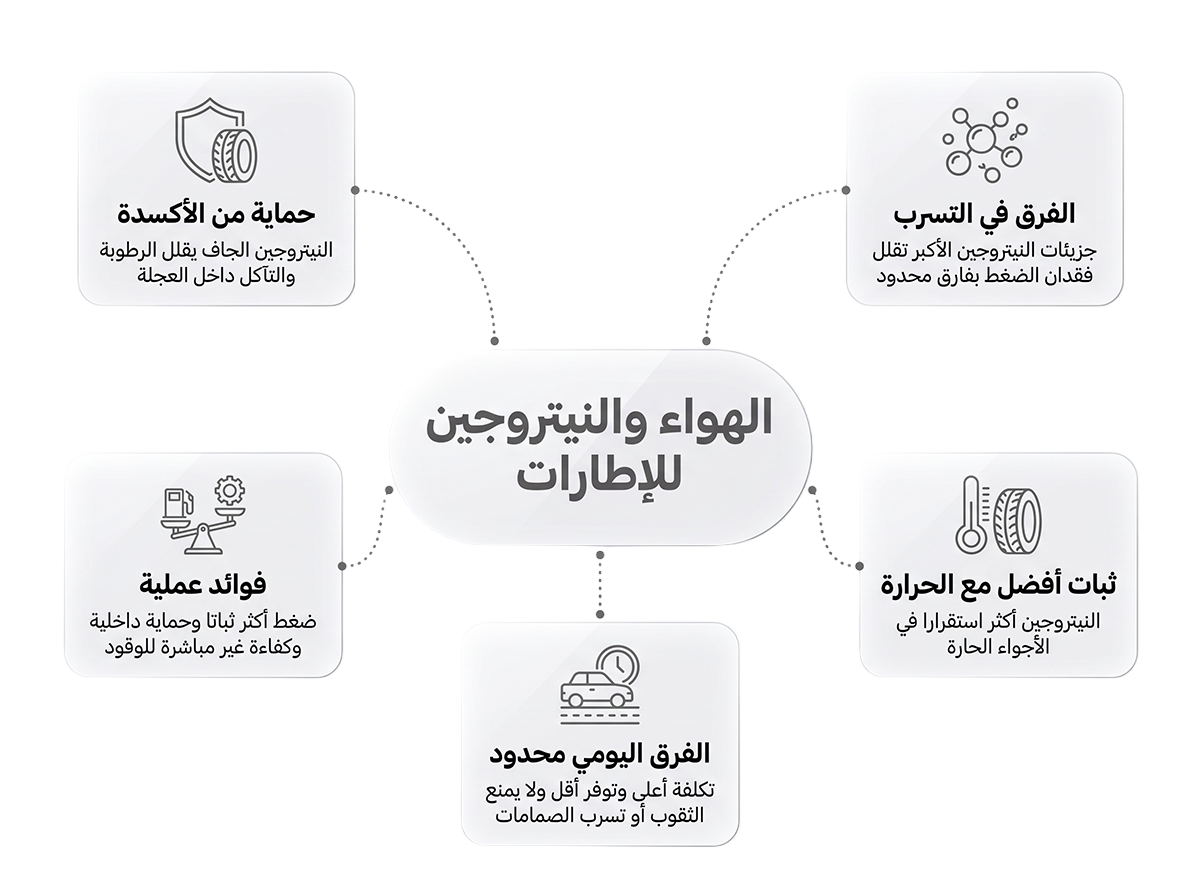
Nitrogen molecules are larger than oxygen molecules, which means that nitrogen leaks through the microscopic pores in tire walls at a slower rate than oxygen.
Some sources suggest that the rate of pressure loss in nitrogen-filled tires can be 3 to 4 times slower than in those filled with regular air.
A field study involving 31 different tire models over a full year also indicated that using nitrogen instead of regular air does not offer the significant difference often claimed in maintaining tire pressure.
When tires are filled with regular air, pressure drops by an average of up to 3.5 psi over the course of a year; in contrast, nitrogen-filled tires recorded a relatively smaller drop of 2.2 psi over the same period.
This means that while nitrogen is indeed superior in reducing leakage rates, the final difference between the two options settles at just 1.3 psi over a full year of use.
"A year-long study revealed that the difference in pressure loss between air and nitrogen is only 1.3 psi. Is this minor difference worth the extra cost?"
- Moisture inside the tire
Regular air contains water vapor and moisture that can seep into the tire, causing internal corrosion of metal wheels over time. It also leads to irregular pressure fluctuations due to sensitivity to temperature changes, in addition to accelerating the oxidation of the tire's rubber components.
In contrast, nitrogen is a dry gas completely free of moisture, making it an ideal choice to protect the tire from such damage and preserve its internal components.
- Pressure stability with temperature changes
Nitrogen molecules have greater thermal stability compared to regular air, making them less susceptible to extreme temperature spikes. Regular air expands significantly more inside the tire when exposed to high heat, causing a noticeable and uneven rise in pressure, whereas nitrogen ensures consistent and stable pressure throughout the drive.
This property is particularly important in harsh operating environments like Saudi Arabia, where asphalt temperatures can exceed 50°C during the peak of summer. Therefore, relying on nitrogen becomes an effective solution to mitigate the risks caused by the expansion of regular air and sudden pressure increases within tires.
In the hot Saudi climate, where temperatures exceed 50°C, nitrogen can be an extra safety option, but remember that monthly pressure checks remain the most important factor regardless of your choice.
Benefits of Nitrogen in Tires
Here are the most significant real-world benefits of filling tires with nitrogen, based on proven scientific studies:
- Better Tire Pressure Retention
As previously mentioned, nitrogen leaks at a slower rate than regular air, meaning you won't need to check and refill your tire pressure as frequently.
- Reduced Oxidation and Longer Tire Life
The oxygen in regular air reacts with tire rubber, causing it to harden and crack over time. Nitrogen, being an inert gas, does not react with tire components, so using it reduces tire degradation by limiting oxidation.
- Better Stability in High Temperatures
In hot weather, nitrogen maintains more stable pressure, thereby reducing the risk of tire blowouts during long summer trips.
- Protection Against Internal Wheel Corrosion
Because it is moisture-free, nitrogen prevents rust and corrosion on the inside of metal wheels.
- Indirectly Improved Fuel Efficiency
Maintaining proper tire pressure reduces rolling resistance and may slightly improve fuel economy. However, it is worth noting that this benefit comes from maintaining the correct pressure, not from the nitrogen itself.
Disadvantages of Nitrogen
To be fair in answering which is better for tires—air or nitrogen—we must also present the disadvantages of nitrogen, the most important of which are:
- Additional Cost
Filling tires with nitrogen is not free, whereas regular air is available at no cost at most gas stations. The cost to fill a full set can reach $70–$150 at some international centers.
- Limited Availability
Not all gas stations or maintenance centers offer nitrogen filling services. If you are on a long trip and experience a sudden loss of pressure, you may not find nitrogen nearby to refill your tire.
- Mixing nitrogen with air reduces its benefits
If you top up a nitrogen-filled tire with regular air in an emergency, the nitrogen purity drops and its benefits are lost; even minor contamination with small amounts of oxygen can negate the advantages of using nitrogen.
- The actual difference is limited for daily driving
Some studies have shown that the difference in pressure loss between nitrogen and regular air is only 1.3 psi over an entire year, a negligible difference for the average driver who checks their tires periodically.
- Nitrogen does not prevent pressure loss caused by punctures or valve leaks
It is important to realize that nitrogen does not prevent pressure loss caused by tire punctures, leaking valves, or rim issues, as these problems cause pressure loss regardless of the gas used.
The feasibility of using nitrogen to inflate car tires
Research and road safety organizations confirm that using nitrogen instead of regular air provides relative effectiveness in maintaining tire pressure for longer periods.
Laboratory data and extended testing indicate that the nitrogen leakage rate is about one-third lower compared to conventional air, which contributes to reducing pressure loss by a slight margin of approximately 1.3 psi over a full year.
In addition to reducing leakage, nitrogen helps limit internal tire oxidation, protecting the rubber from long-term degradation. However, this degradation is not a priority for the vast majority of drivers, as tires are typically replaced due to normal wear andtread wear before oxidation significantly impacts their safety.
Accordingly, experts agree that there is no economic justification for the average driver to incur additional costs for nitrogen tire inflation. The most important and effective practice for ensuring vehicle safety andtire longevity is to rely on regular air while committing to checking tire pressure at least once a month.
Which is better for tires: air or nitrogen?
The best choice between inflating tires with regular air or nitrogen depends on how you use your vehicle and your daily needs. Nitrogen is a practical and preferred option for drivers who travel long distances at consistently high speeds, or for those driving in areas with extremely high temperatures, as pressure stability helps enhance driving safety.
Nitrogen is also ideal for racing and high-performance cars, as well as heavy vehicles and trucks that require maximum stability. It is also a great choice for those who want to reduce the frequency of pressure adjustments while still maintaining regular checks.
On the other hand, regular air remains the most convenient and economical choice for the vast majority of drivers whose vehicle use is limited to daily commuting within the city.
Air is also an ideal option for those who commit to checking tire pressure monthly, drivers who prefer to avoid extra costs for limited benefits, and those who frequently travel in areas where nitrogen inflation services may not be available.
Essential tips for maintaining your tires, regardless of the gas used
Whether you choose air or nitrogen, there are essential tips you should follow:
- Check the pressure of all tires, including the spare tire, at least once a month when the tires are cold (meaning the car has not been used for at least 3 hours).
- Adhere to the tire pressure recommended by the manufacturer, which can be found on the driver's side door pillar or in the owner's manual.
- Never exceed the maximum pressure limit indicated on the tire sidewall.
- Inspect the tread depth and look for any cracks or bulges in the tire sidewalls.
- Always try to refill with nitrogen when needed to maintain its purity and benefits, and avoid mixing it with regular air except in emergencies.
Important facts about nitrogen in tires
There are several important facts to consider when deciding whether air or nitrogen is better for your tires. Here are the most significant ones:
- Nitrogen does not directly affect fuel economy. You can improve fuel efficiency by maintaining the correct tire pressure, regardless of the type of gas used.
- Nitrogen reduces the risk of blowouts caused by overheating, but it does not prevent them entirely. Tires are still susceptible to blowouts due to punctures, damage, or over-inflation.
- Nitrogen may slightly extend tire life by reducing oxidation, but it does not make them last forever. Tire longevity primarily depends on the quality of the tire itself, driving conditions, and regular maintenance.
- Physically speaking, 35 psi of nitrogen is the same as 35 psi of regular air. As long as the pressure is the same, the grip remains identical regardless of the gas type.
"Regular air is the most cost-effective and suitable choice for daily driving, while nitrogen is an ideal solution for long trips and extreme heat. In either case, monitoring and regularly checking your tire pressure remains the best way to ensure your safety on the road."
In any case, nitrogen inflation services are widely available at many maintenance centers and tire dealerships across Saudi Arabia. Given the high temperatures during the Saudi summer, many drivers find that nitrogen provides extra peace of mind, especially during long trips on desert roads.
However, as previously mentioned, regular maintenance and consistent tire pressure checks outweigh any benefits nitrogen alone might provide. This is the detailed answer to the question: Is air or nitrogen better for tires?