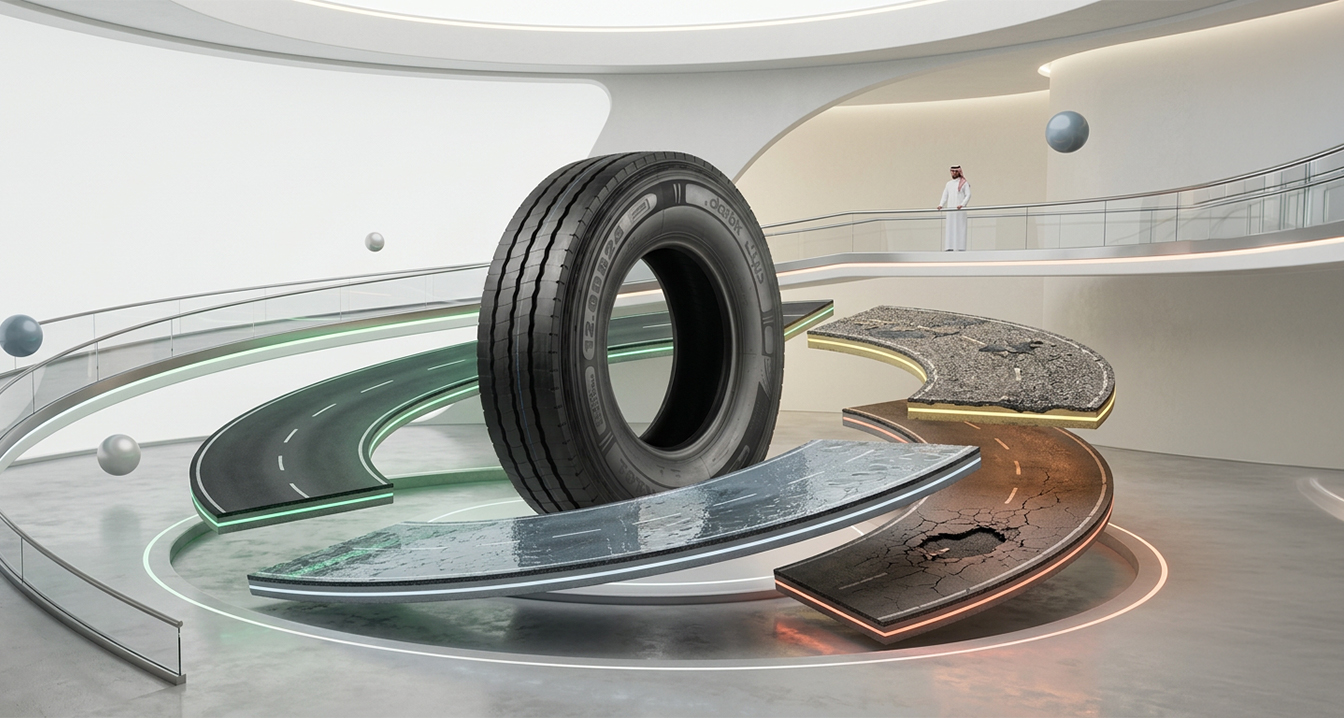
Tires are the link between trucks and the road, serving as the most critical engineering component in any vehicle or truck. Contrary to the common misconception among many truck drivers that tires are merely consumable rubber components, a tire is classified as a complex engineering system that is fundamental to influencing a truck's performance. The tire's functional performance dictates both active vehicle safety and operational efficiency, as well as fuel economy, driver comfort, and stable road handling. Therefore, selecting the appropriate and optimal tire requires a comprehensive understanding of tire function and the factors influencing its performance, including friction dynamics, heat dissipation efficiency, and rolling resistance index. The vehicle's ability to brake, corner, and maintain stability depends on the tread characteristics and rubber compounds used in tire manufacturing. Any deterioration in these properties, whether due to wear or aging, inevitably leads to a decline in the available friction coefficient, consequently increasing stopping distance and reducing control, especially in challenging conditions like rain or wet roads.
The purchasing decision for truck tires hinges on safety, performance, and economic sustainability. Therefore, the process of buying tires should be viewed as a strategic investment that transcends the initial product cost. Choosing low-quality, poor, or unsuitable tires for operating conditions leads to rapid and unexpected performance deterioration, as well as a significant increase in accident risks, especially in difficult driving conditions and high ambient temperatures. In addition to safety concerns, inadequate or neglected tires impose significant long-term operational costs, primarily reflected in elevated fuel consumption rates. Engineering studies have confirmed that low-rolling-resistance tires significantly reduce the engine's kinetic energy loss, positively impacting fuel consumption. Consequently, making purchasing decisions based on precise technical criteria ensures sustained performance and safety during long journeys, while also delivering economic savings to the owner through reduced vehicle operational costs.
Thus, this article aims to provide consumers and professionals with scientifically-backed selection principles, free from estimations and personal opinions. It does so by analyzing five key areas presented as consumer tips, forming the backbone of a strategic purchasing decision.
Tires are not just round rubber; they are the backbone of commercial transport.
Why Should You Replace Your Tires?
Timely tire replacement is a crucial preventative measure in commercial road networks. It's not just about complying with legal requirements, but also about maintaining the necessary friction coefficient for safe braking and vehicle stability under various driving conditions. This ensures an optimal driving experience on commercial highways, thereby boosting logistical efficiency. To answer the question, "Why should you replace your tires?", the following sections summarize the clear indicators of tire wear and end-of-life.
First: Critical Wear Limits
Tread depth is a crucial factor determining tire lifespan and its ability to efficiently displace and disperse water, preventing common highway hydroplaning and maintaining mechanical grip on wet roads. As tread depth diminishes, these capabilities are significantly reduced. Specialized organizations and international bodies recommend tire replacement when tread depth falls below 1.6 mm, which is the official legal limit in Saudi Arabia and globally. However, in challenging and variable environments like Saudi Arabia, where rubber and its chemical compounds are significantly affected by very high temperatures, experts advise more cautious tire replacement when tread depth falls below 2mm. This serves as a necessary precautionary measure to ensure the tire retains its dynamic properties, particularly its grip on hot and semi-wet surfaces.
Tread depth is the most accurate visible indicator of tire wear.
Second: Chemical Degradation of Rubber Over Time (DOT Code)
Many drivers mistakenly believe that unused tires remain ready for operation indefinitely. This is a prevalent misconception in the truck and commercial transport sector, as rubber chemically degrades through oxidation or dry aging. This phenomenon causes tire deterioration even during storage. This aging manifests as hardening of rubber compounds and a loss of elasticity, increasing the likelihood of internal and surface cracks and tears. For this reason, it is often recommended to replace tires older than 6 years from their manufacturing date, even if their tread is still within legal limits. In hot environments, such as the Arabian Gulf climate, a maximum lifespan of no more than 4 years, and at most five years, is preferred, as high temperatures and humidity significantly accelerate oxidation and polymer aging. Additionally, professional drivers should regularly inspect the DOT code to accurately determine tire age by reading the manufacturing date code stamped on the tire's sidewall. This code consists of several digits; the last four indicate the manufacturing date, with the first two representing the week (01-52) and the last two representing the year of manufacture.
Third: Negative Impacts on Truck Performance and Efficiency
Old, worn, or underinflated tires increase a truck's resistance to movement, negatively impacting its efficiency and ease of operation according to its specified standards. The negative effects of using such tires can be summarized as a fundamental problem: rolling resistance. Rolling resistance increases in tires that have aged, experienced significant wear, or are used on a truck with low or non-compliant inflation pressure. This resistance demands more engine power to propel the vehicle and maintain its speed. Field tests in heavy transport have demonstrated that specially designed low-rolling-resistance tires significantly reduce fuel consumption, with a decrease of up to 4.8% under controlled test conditions. This confirms that deteriorated tires impose a significant, albeit often unseen, long-term operational cost. We must understand that a tire is an investment, not a consumable. Therefore, the decision to replace tires is not merely a safety measure taken only when legal wear limits are reached, but an investment in the vehicle's operational efficiency. The savings achieved through highly efficient tires—in terms of fuel consumption, reduced engine load, and truck stability on the road, especially for commercial vehicles or logistics fleets—mean that a significant portion of the cost of low-resistance, high-efficiency tires can be recovered through reduced fuel consumption over their lifespan. Consequently, early replacement with high-quality tires, such as those from Darbk Saudi Company, contributes to improving the vehicle's economic sustainability index.
Fourth: Uneven Wear Phenomenon
Uneven tire tread wear is a vital mechanical indicator of a deep flaw in the driving system and road interaction, necessitating immediate tire inspection. Localized wear, such as a greater concentration on the inside of the tread, points to alignment issues like excessive negative camber angles or improper tire pressure. Another type of wear is cupping or wavy wear. The presence of this type of wear, appearing as repeated cups or undulations around the tire's circumference, indicates a serious suspension defect, such as issues with shock absorbers or damage to vital components of the truck's suspension, or overall truck imbalance on its tires. These issues have various causes, which are discussed elsewhere. It is crucial to address the root mechanical cause of tire wear before replacing them with new ones to prevent recurrence and damage to the new tires. In summary, a comprehensive assessment of tire lifespan must consider two integrated criteria: mechanical age (degree of wear) and chemical age (aging). In high-temperature regions like Saudi Arabia and the Arabian Gulf, chemical age or aging holds greater importance, as a tire may fail internally due to the hardening and deterioration of rubber materials under high heat, even if the tread depth remains normal.
Darbk Tires... Resist Wear and Aging, Maintain Safety
What are the 5 Most Important Tips Before Buying Tires?

Tip One: Precise Matching of Engineering Specifications
Full tire compliance with the engineering specifications set by the vehicle manufacturer is the initial and most crucial step in the tire purchasing process. This compliance ensures the integrity of the truck's suspension system, aids in accurate speedometer operation, and enables the truck to carry loads and travel at approved speeds on local and international roads smoothly and comfortably. To fully understand this tip, we can divide it into 3 stages:
Stage One: Analysis and Understanding of Symbols
The tire sidewall contains a comprehensive map of symbols that are key to understanding the tire's nature, type, manufacturing process, and quality. Initially, you'll find a three-digit number (e.g., 205) indicating the tire's section width in millimeters. A higher number means greater tire contact with the asphalt. This is followed by a two-digit aspect ratio (e.g., 55), which represents the sidewall height as a percentage of its width. A lower ratio indicates a shorter sidewall, reducing tire distortion during sharp turns and increasing steering response, thus providing better truck control. Additionally, the letter R signifies that these are radial tires, meaning the plies run radially across the tire, which is the most common structure offering control and comfort for trucks. The number following the letter R represents the rim diameter in inches.
Stage Two: Speed and Load Indicators
The Load Index (LI) is a two-digit numerical code that represents the maximum load a single tire can safely carry at the maximum permissible inflation pressure. This index is critically important; failing to select a tire with a load index that meets or exceeds the recommendations of both the tire and truck manufacturers exposes the truck to the risk of overloading and structural tire failure, especially during long commercial journeys. For instance, a tire with a load index of 92 can carry a maximum load of 630 kg. Next is the Speed Symbol (SS), an alphabetical character representing the maximum approved speed the tire can safely and sustainably withstand. The speed symbol is directly linked to the tire's engineering capability to dissipate heat generated by friction and rotation; the higher the rating (e.g., T to Y), the greater the tire's ability to endure thermal stress at high speeds. Driving at speeds exceeding the specified speed rating significantly increases the likelihood of internal temperature rise and structural failure (tire blowout), posing a severe risk. A table illustrating maximum speeds and their corresponding symbols follows.
Stage Three: Impact of Non-Compliance on the Truck
Violating the rules for matching tires to the truck, such as altering the tire size—whether its width or aspect ratio—in a way that deviates from official manufacturer specifications, changes the wheel's overall dynamic diameter. This alteration directly impacts the number of rotations required to cover a specific distance. When a driver installs new tires that are smaller than the size recommended by the manufacturer and experts, the speedometer may display a speed higher than the truck's actual speed, posing a severe traffic hazard. Moreover, it disrupts the harmony of readings from vehicle control systems like the Anti-lock Braking System (ABS) and Electronic Stability Program (ESP). The engineering relationship between aspect ratio and driving characteristics is not merely an aesthetic choice but a mandatory consideration for all drivers. A lower ratio (a wider and shorter tire) means stiffer and more durable sidewalls, significantly improving steering response. Therefore, tire buyers must balance their priorities, such as comfort, sporty performance, or high speed, especially when selecting this ratio.
Tip Two: Reading the Uniform Tire Quality Grading (UTQG) Label
The Uniform Tire Quality Grading (UTQG) system, established by the U.S. National Highway Traffic Safety Administration (NHTSA), is considered a fundamental comparison tool designed to provide consumers with objective measures of tire performance across three vital aspects: treadwear, traction, and temperature resistance. UTQG grades are assigned by tire manufacturers themselves based on their internal test results and are required to be marked on the sidewall of all passenger car tires sold in the United States. In Saudi Arabia, we rely on the Saudi Quality Mark, which Darbk Company's tires proudly bear. By reading the quality label, you will be able to discern the true quality of the tires, independent of any seller's claims.
Tip Three: Considering Climatic Conditions and Fuel Economy
Smart tire purchasing necessitates selecting rubber compounds and structural designs that perfectly align with the operating environment (temperature and energy efficiency) the truck encounters. In regions experiencing high temperatures for most of the year, the choice should favor tires with rubber compounds engineered to resist thermal stress and softening under extreme heat. In climates like Saudi Arabia's, it is advisable to opt for summer tires or all-season tires specifically designed to endure high temperatures more effectively than other types. The absolute priority should be given to tires with a temperature rating of 'A' in the UTQG system, as this ensures their ability to efficiently dissipate heat and prevent premature rubber aging.
Tip Four: Ensuring Installation Accuracy (Balancing and Alignment)
The decision to purchase the right tires is only complete when the installation process includes precise mechanical services: proper balancing and alignment. These operations ensure an even distribution of forces and load-bearing, which is the true key to extending tire lifespan and achieving the highest levels of safety. Therefore, new tires must be installed at specialized centers that guarantee adherence to the necessary engineering steps, such as inspecting rims and valves, as rim cleanliness is absolutely crucial for perfect tire seating. It is recommended to install a new valve stem every time a tire is replaced to prevent moisture and dirt from entering the tire. By using specialized tools to securely mount and properly fasten tires to the wheel, damage to the internal structure of the tires or the rim during driving is prevented.
Tip Five: Tire Lifecycle Management (Preventive Maintenance)
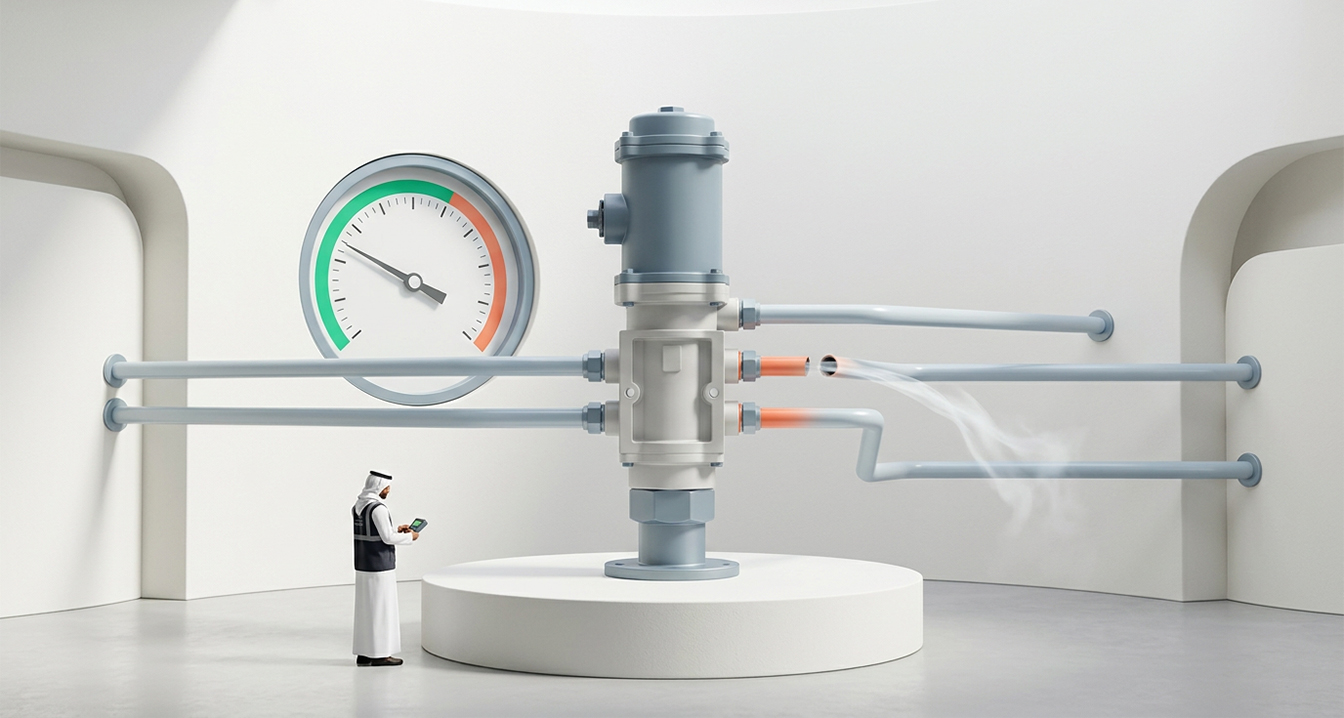
To achieve optimal performance and ensure the tire reaches its maximum lifespan, strict preventive maintenance programs must be implemented, encompassing driving habits and regular technical procedures. For effective tire lifespan management, maintaining proper tire pressure is crucial, as it is the single most influential factor in determining tire life, efficiency, and safety. This prevents tire failure, as low pressure causes excessive tire deformation during rotation, leading to increased internal heat generation and rolling resistance. This heat buildup is a primary cause of increased tire blowout risk during journeys. Therefore, a systematic approach to regular tire inspection must be adhered to, using an accurate pressure gauge to verify pressure. It is preferable to perform the inspection when the tires are cold, before exposure to the sun or driving on them for at least three hours.
What do you know about Darbk Tire Company in Saudi Arabia?
Darbk Tire Company is considered one of the leading pioneers in manufacturing specialized truck tires in Saudi Arabia. It holds the Saudi Quality Certificate, which is regarded as the highest accredited quality certification within the country. This is because Darbk's tires are specifically designed for the Saudi environment, capable of handling the high and varying pressures and temperatures found across Saudi Arabia's diverse terrain and climate, making Darbk Tire Company the preferred choice for many truck drivers in the Kingdom.