
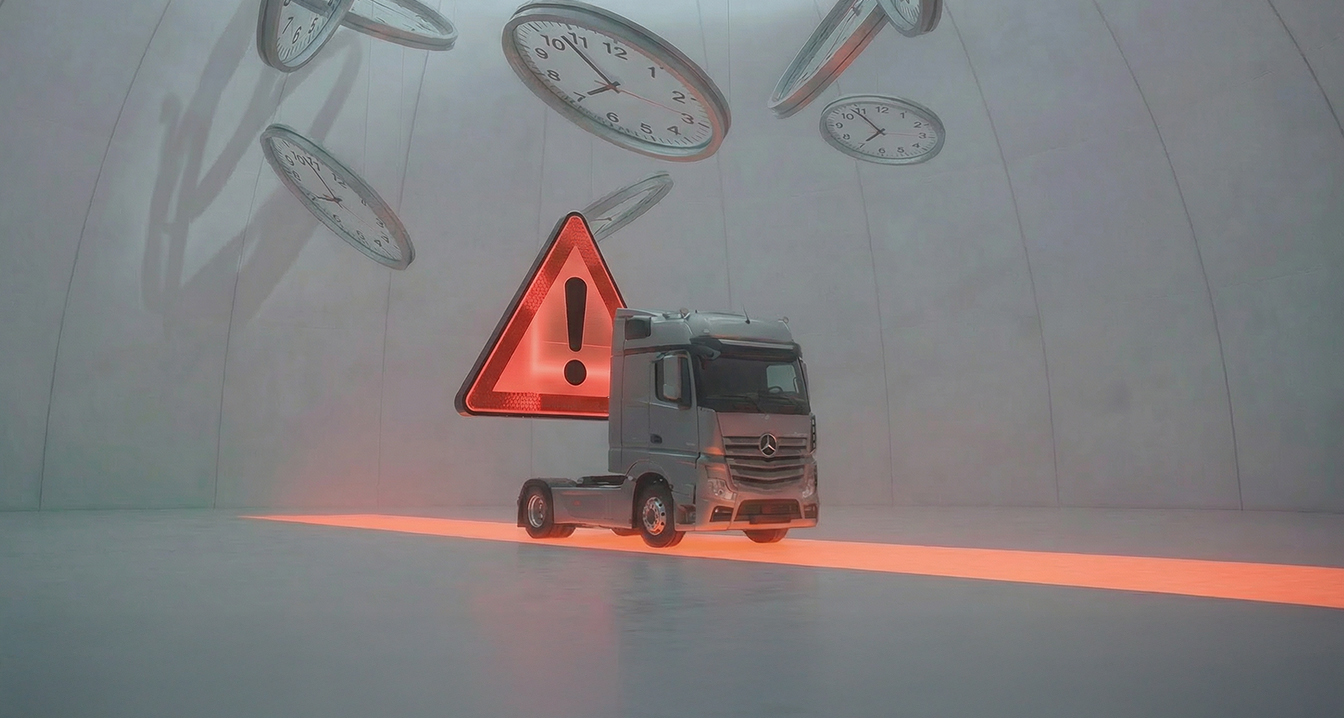
Time, that simple word, can change our behavior without us realizing it. Sometimes we're on the road, knowing we're late, and we start pressing the gas pedal a little harder than usual, overtaking vehicles faster, or tending to drive differently than we normally would. This is what's known as time pressure while driving, a feeling anyone can experience, but unfortunately, it's one of the most dangerous causes of accidents worldwide.
When a driver feels time is pressing, their focus shifts from safety to making the appointment. This simple mental shift causes stress to rise, attention to drop, and behavior to become more impulsive. That's why this topic has become a subject of study for traffic experts, psychiatrists, and human behavior specialists.
In this article, we will understand why time pressure poses a real danger to drivers and those around them, how it affects decision-making while driving, and how we can deal with it more consciously. We will also see how Darbk tires can be an important partner in maintaining your safety even when you feel time is pressing.
What is time pressure while driving?
Time pressure is simply the driver's feeling that they might not arrive on time. The reason could be a work appointment, dropping off children, or even delivering a shipment for a truck driver. The problem isn't the delay itself, but the internal sense of urgency that makes the driver change their behavior.
Before we begin analyzing the causes, it's important to remember that when a driver is under time pressure, not only does their behavior change, but their brain's entire functioning changes. Stress makes reactions faster but less accurate, and narrows focus even though the road requires broad awareness.
Therefore, this sensitive psychological moment is what transforms a driver from a calm person capable of making wise decisions into someone who acts impulsively and makes easily avoidable mistakes.
The true meaning of time pressure:
It's a state of mind that makes the driver feel every minute counts, leading them to drive faster than usual. They reduce stop times. They also ignore some safety rules.
How does psychological pressure develop?
When a person is stressed, the body releases hormones like adrenaline and cortisol. These hormones put the mind in a "fight or flight" mode, which is suitable for emergencies but completely unsuitable for driving.
Under stress, the mind becomes less capable of calm focus, and the driver starts making quick, ill-considered decisions.
How does time pressure affect driver behavior?
Time pressure doesn't just make drivers faster; it changes their way of thinking and interacting with the road, pushing them to do the following:
Excessive Speed:
When a driver feels they are late, the first natural reaction is to increase speed. The problem is that high speed reduces the field of vision and increases stopping distance.
A study published by the NHTSA indicates that speeding was a direct cause in 29% of traffic fatalities in 2022.
Reckless Decision-Making:
Drivers under pressure tend to:
- Overtake vehicles aggressively.
- Changing lanes quickly.
- Running yellow lights.
- Not maintaining a safe distance.
Reduced concentration:
The mind becomes preoccupied with time rather than the road. This leads to distraction and the oversight of small details that could prevent accidents.
Physical tension:
Tension in the hands, stiffness in the back, and strained vision. These effects reduce the ability to maneuver.
What do global statistics say?
The numbers aren't just dry data; they clearly reveal the extent of the danger that arises when a driver operates under time pressure, making even the simplest road situations more complex.
A driver who feels they have a task to complete quickly automatically starts to perceive the road differently: distances seem shorter, time feels faster, and even a slight delay makes them feel like they're losing control of their entire day. This feeling makes the driver more stressed and less patient, paving the way for mistakes.
What causes drivers to reach this dangerous stage?

Work pressure:
Truck drivers experience this pressure daily. They have strict schedules, specific delivery times, and long routes that cannot tolerate delays.
Therefore, any lost minute can translate into financial loss for the company, a delay for an entire trip, or additional pressure on the next day's schedule.
Consequently, the feeling that time is running out makes drivers feel compelled to exceed their normal speed, reduce rest periods, or make bolder decisions than they should. Over time, this pressure transforms into mental and physical exhaustion, directly impacting their ability to concentrate and drive safely.
Bad weather conditions:
When rain, fog, or strong winds combine with time pressure, driving becomes even more dangerous. A driver who feels late might not allow themselves enough time to slow down or assess road conditions.
Furthermore, wet roads reduce traction by up to 30%, and with haste, the likelihood of skidding or losing control becomes much greater. Fog also reduces visibility, forcing the driver to rely on quicker reactions, which is absolutely unsuitable when the mind is under pressure.
Unfamiliar roads:
Driving on new roads requires double concentration: reading signs, noticing exits, and anticipating the nature of turns. All of these demand high focus from the driver, but when time pressure is added, the driver becomes more prone to getting lost, taking a wrong exit, or hesitating in decisions. Not knowing the road naturally makes the brain tense, and when combined with a sense of urgency, the chances of error become significantly higher.
Night Driving:
At night, visibility significantly decreases, and the glare from other vehicles' lights intensifies. A driver under pressure might try to compensate for poor visibility by speeding, believing they are "making up for lost time."
However, the reality is that poor visibility combined with stress is extremely dangerous. Night driving requires calmness, focus, and patience, qualities that are hard to maintain when a driver feels rushed. Furthermore, the human eye reacts more slowly to light changes in the dark, reducing the ability to detect hazards in time.
How can a driver control themselves when they feel they are running late?
Before we delve into practical ways to manage time pressure, it's important to recognize that self-control while driving isn't an innate skill; rather, it's the result of awareness, training, and repetition. A driver who knows how to calm themselves when anxious is a driver capable of protecting themselves and their passengers. Therefore, these steps for managing pressure are not just tips, but tools to help you regain control of your mind before you lose control of your car.
Resetting Your Mindset:
Resetting your mindset is not just an inspiring phrase; it's a fundamental step to alleviate stress while driving. When a driver feels they are running late, the mind starts sending urgent signals, pushing them to make hasty and ill-considered decisions.
This is where self-awareness comes in: remind yourself that the goal isn't to arrive quickly, but to arrive safely. Take just one second to pause, reorder your thoughts, and allow yourself to break free from the cycle of haste. This small moment of awareness can completely change your behavior and give you the calm needed to control the situation.
Planning Ahead:
Add an extra 10–15 minutes as a buffer for delays. These few minutes could save your life.
Tire Maintenance:
Good tires are a safety valve when maneuvering or braking.
Utilizing Driver-Assistance Systems:
Such as:
- Collision warning.
- Lane keeping assist.
- Adaptive cruise control.
How do Darbk tires help you drive safely under time pressure?
Driving under pressure demands more than just skill; it requires reliable equipment that responds to any sudden or critical decision. This is where Darbk tires come in:
Consistent performance in rapid maneuvers:
When you have to make a quick decision, you need a tire that can handle maneuvers without losing balance.
Shorter stopping distance:
Darbk's advanced tread pattern helps reduce braking distance in sudden situations.
High heat resistance:
Higher speed = higher heat, and Darbk can withstand temperatures up to 80 degrees Celsius.
SASO Saudi Quality Mark:
This means the tire has passed tests for pressure, heat, and durability.
With Darbk, even when time is pressing, the road remains under your control.
Golden tips for calm driving:
- Leave home or the warehouse earlier than usual.
- Don't let an appointment be a reason to take risks.
- Avoid aggressive driving.
- Check your tires before long trips.
In conclusion...
Feeling pressed for time is natural, but letting it dictate your driving style can be catastrophic. The road is unforgiving, and a single mistake can be costly. However, conscious driving, proper maintenance, and the right tires can significantly reduce the risk.
No matter how busy your schedule or tight your time, remember that your life is more important, and Darbk tires are the partner that gives you confidence and stability in the toughest conditions.
Perhaps one of Darbk's most important slogans is: Your safety cannot be postponed.


