

Many drivers believe that a tire is just a black rubber circle that spins with the wheel, and that the difference between one tire and another is merely in name or appearance. However, the reality is quite different. Choosing the right tire for the roads you drive daily can be the difference between a safe and comfortable ride, and higher fuel consumption, rapid wear, and perhaps even unforeseen dangers.
In this article, we will explain the difference between highway tires and off-road tires, why each type was designed, what its purpose is, and what happens when we use the wrong tire in the wrong place. We will conclude by showing how Darbk offers balanced solutions that suit various roads and drivers' needs.
What are Highway Tires?
Highway tires, also known as H/T, are specifically designed for driving on paved roads such as highways and urban streets.
Characteristics of Highway Tires:
These tires feature several key characteristics that make them the most suitable choice for daily driving on paved roads and highways. These characteristics were not designed arbitrarily; rather, they are the result of engineering studies aimed at achieving the highest levels of comfort, stability, and reduced fuel consumption, especially for drivers who spend long hours on highways. They offer the following features:
- Relatively smooth tread pattern.
- Low rolling resistance.
- Lower road noise.
- High stability at high speeds.
According to Michelin's tire guidelines, this type of tire is designed to provide drivers with greater comfort and lower fuel consumption on paved roads.
What are Off-Road Tires?
Off-road tires are designed for driving off paved roads, in harsh environments that regular tires cannot withstand, such as sandy, muddy, and rocky terrains, mountainous or agricultural areas, and even demanding work sites. This type of tire does not aim for comfort or quietness as much as it focuses on endurance, durability, and the ability to get through the toughest conditions without the driver losing control.
Types of Off-Road Tires:
- All-Terrain (A/T):
This type is an ideal compromise for drivers who travel between paved and unpaved roads. It offers a balance between acceptable comfort on asphalt and good capability for handling sand, gravel, and uneven roads, making it a popular choice for mixed daily use.
- Mud-Terrain (M/T):
Specifically designed for very challenging terrains, such as deep mud, soft sand, and rocks. It features a very wide and pronounced tread pattern that allows the tire to self-clean from mud, but it is noisier and less comfortable on highways.
Characteristics of Off-Road Tires:
- Deep and wide tread pattern:
Helps dig into sandy or muddy terrain and prevents slipping, with the ability to eject dirt and gravel during rotation.
- Thicker sidewalls:
Protect the tire from tearing or cutting when rubbing against rocks or sharp edges, and increase impact resistance.
- Higher grip on mud and gravel:
Provides the driver with better control in challenging conditions, especially when climbing or exiting off-road tracks.
Goodyear's guidelines indicate that this type of tire prioritizes strength and durability over comfort.
Difference in Tread Pattern Design:
The tire tread design is one of the most significant differences between highway tires and off-road tires. The tread is not merely an aesthetic element; it is a carefully engineered design that determines how the tire interacts with the road surface, its ability to drain water, noise levels, and grip.
In this section, we will understand how tread design differs between the two types, and why each design performs its function efficiently in its specific environment:
- Highway Tire Tread:
- Parallel grooves for water drainage.
- Reduced friction with asphalt.
- Reduced noise and vibration.
- Off-Road Tire Tread:
- Large, widely spaced rubber blocks.
- Wide voids to prevent mud accumulation.
- Better grip on uneven surfaces.
According to Continental's reports, tread design alone can alter grip levels by up to 30% depending on the road type.
Performance Difference on the Road
Performance is what the driver directly experiences from the very first kilometer. Even if tires look similar, vehicle behavior on the road differs radically depending on the type of tire used. This is where the true difference between highway and off-road tires becomes apparent, in terms of stability, control, responsiveness, and how the tire handles speed or challenging terrain.
- Highway Performance:
Highway tires are specifically designed for stable, continuous driving on asphalt, a difference drivers notice immediately. Their key characteristics include:
- Excellent Stability at High Speeds:
Thanks to their smooth tread pattern and balanced rubber distribution, these tires maintain consistent road contact, reducing steering wheel vibration and instilling a sense of control and confidence in the driver, especially on long trips.
- Shorter Braking Distance on Asphalt:
The tread design increases the contact patch with the road, improving braking efficiency and reducing stopping distances, particularly on dry and wet surfaces.
- Smoother, Quieter Ride:
Fewer tread voids reduce road noise from tire friction, a difference drivers clearly notice when compared to off-road tires.
- Off-Road Performance:
Off-road tires deliver a completely different performance, engineered to handle unpredictable conditions and challenging terrain. They offer:
- Improved Traction in Sand and Mud:
Deep treads and wide voids allow the tire to dig into the surface rather than slide over it, along with self-cleaning capabilities for mud and sand.
- Enhanced Control on Slopes:
Whether ascending or descending, these tires provide superior grip, reducing the risk of slipping, especially on slick or uneven surfaces.
- Increased Puncture and Impact Resistance:
Thicker sidewalls and a robust internal structure make the tire more resilient to impacts from rocks and sharp edges, a crucial safety feature for off-road driving.
NHTSA data indicates that using tires not designed for the road significantly compromises control and safety.
Fuel Consumption Differences:
Fuel consumption is a factor drivers feel directly, as it significantly impacts daily and monthly costs, especially with rising fuel prices and frequent use. The difference between tire types isn't as minor as some believe; it can accumulate into a substantial financial burden over time.
- Highway Tires:
They have lower rolling resistance, meaning they require less energy to move and maintain momentum. This helps the engine operate more efficiently and leads to reduced fuel consumption, especially during long journeys and stable driving on paved roads.
- Off-Road Tires:
They are heavier and have a more aggressive tread pattern, which increases rolling resistance and forces the engine to work harder. This results in higher fuel consumption, especially when used consistently on highways.
According to the U.S. Department of Energy, using tires unsuitable for the road can increase fuel consumption by 5% to 8%.
Comfort and Noise Level Differences:
Comfort and noise are factors a driver might not initially notice, but they become evident with daily use and long journeys. Tires don't just impact performance or safety; they also determine cabin quietness and how fatigued a driver feels after hours behind the wheel. This is where a clear distinction between highway and off-road tires becomes apparent.
- Comfort with Highway Tires:
- Low Noise:
Thanks to their smooth and closely spaced tread pattern, tire-to-road friction noise is reduced, making the cabin quieter, especially at high speeds.
- Fewer Vibrations:
The tire's balanced design reduces road-induced vibrations, directly enhancing driver and passenger comfort.
- Comfortable Long-Distance Driving:
This type of tire is highly suitable for long journeys and daily driving, as it reduces fatigue and provides a sense of stability and smoothness on the road.
- Noise with Off-Road Tires:
- Louder on Paved Roads:
The wide gaps and large rubber blocks in the tread pattern result in noticeable noise when driving on asphalt.
- Noticeable Vibration at High Speeds:
The tire's stiffness and aggressive tread pattern can transmit more vibrations to the cabin, especially during continuous use on highways.
This difference might not be bothersome on short trips or when driving off-road, but it becomes pronounced and fatiguing during long journeys or frequent daily use.
Lifespan and Wear Differences:
- Highway tires last longer when used in their intended environment.
- Off-road tires wear out faster when constantly used on asphalt.
USTires studies indicate that a tire used in an unintended environment can lose up to 25% of its lifespan.
Risks of using the wrong tire in the wrong place:
- Off-road tire on asphalt: higher noise and longer braking distances.
- Highway tire in off-road areas: risk of slipping and punctures.
The mistake here doesn't just cost money, it could cost safety.
How to choose the right tire for your driving style?
Ask yourself:
- Where do I drive most of the time?
- Do I go off-road or on unpaved roads?
- Am I looking for comfort or grip?
In some cases, the ideal solution is a middle ground, and that's where Darbk Tires comes in.
How does Darbk provide the right solution for every road?
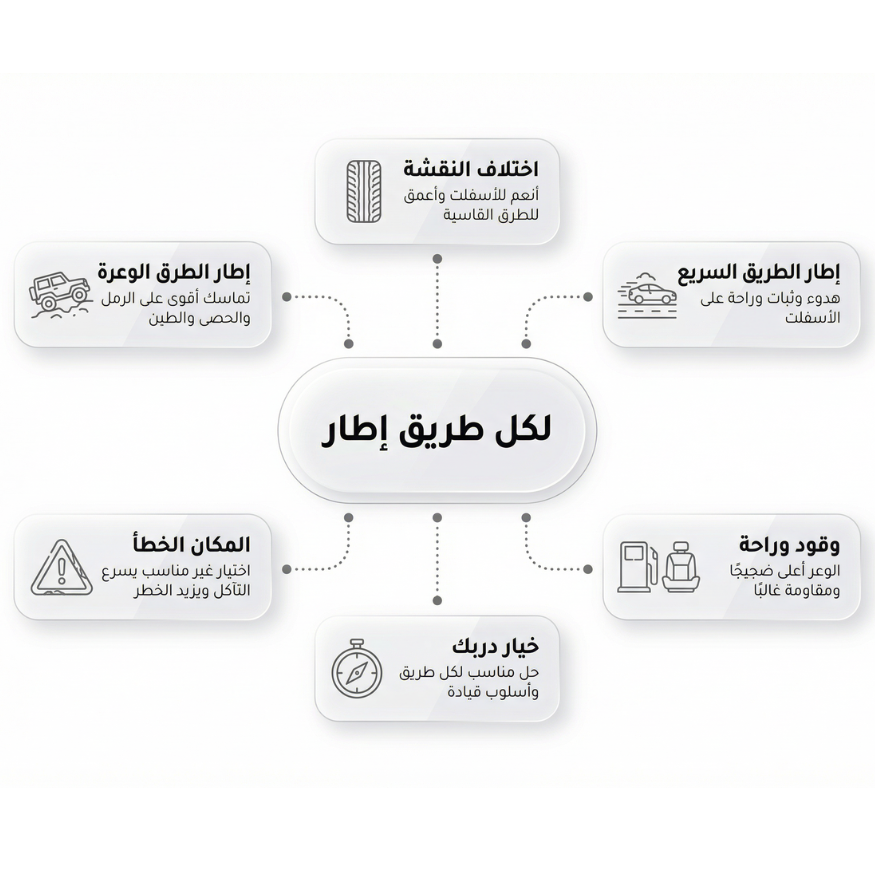
At Darbk, we don't believe in a one-size-fits-all solution; instead, we develop tires suited for every road, to achieve the following:
- Highway tires with quiet operation and fuel efficiency.
- Off-road tires with a robust tread pattern and high durability.
- Strict quality tests and approved Saudi standards.
Darbk's internal tests have shown improved performance and stability by up to 15% when choosing the right tire for each road.
In conclusion...
No one tire is always best; there's a right tire for every journey. When you understand the difference between highway and off-road tires, your decisions will be smarter, your driving safer, and your costs lower. Making the right tire choice, especially from a trusted brand like Darbk, means true peace of mind on every journey.


