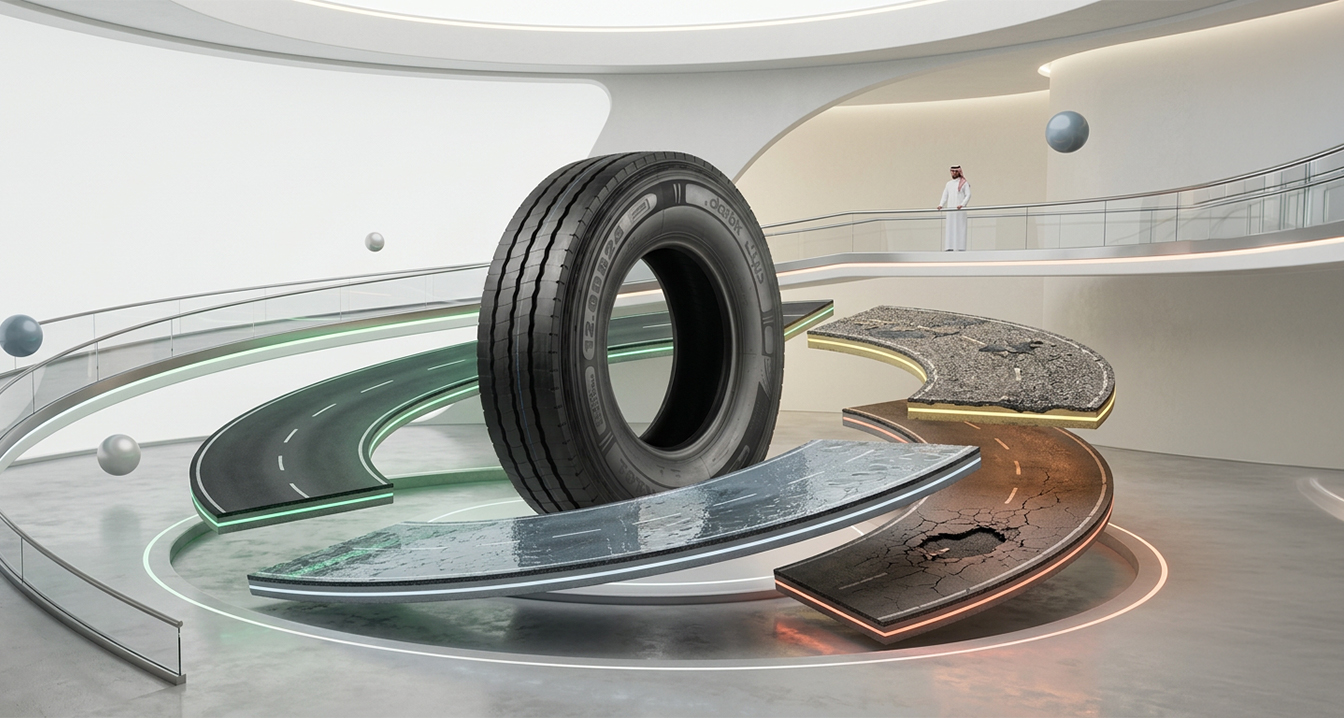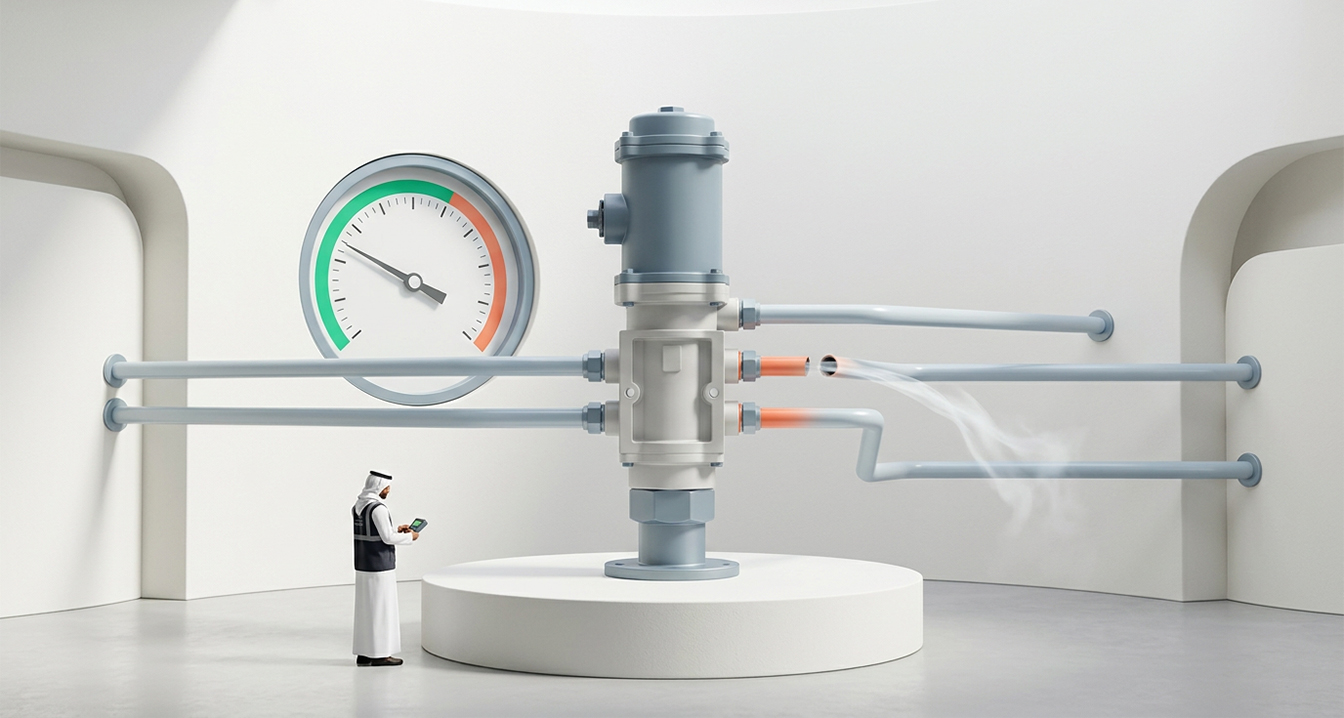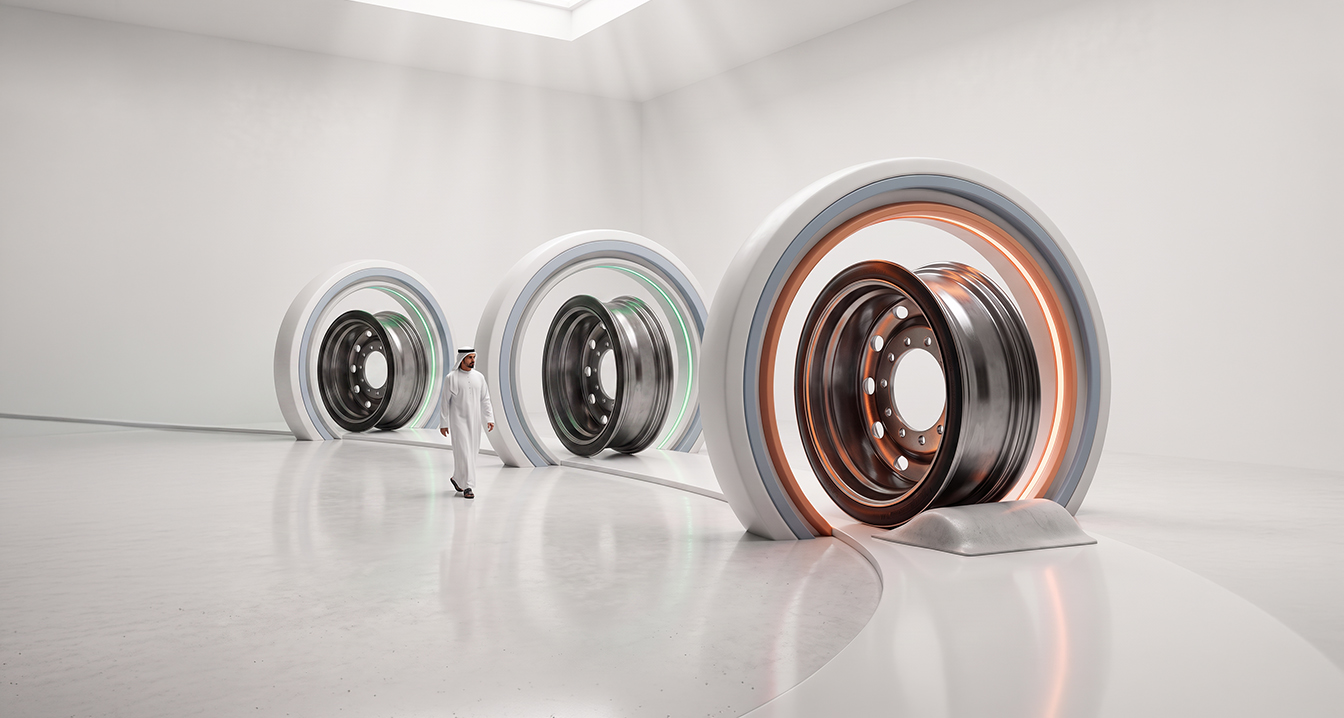
The impact of rim size on tires is one of the most important considerations for truck drivers and fleet owners when thinking about upgrading their vehicle wheels.
The question that always comes to mind is: Does installing larger rims damage truck tires? This question is closely linked to vehicle safety, performance efficiency, and economic viability.
With the growing popularity of larger rims in the trucking world—whether for aesthetic appeal or to enhance off-road performance—it is crucial to understand this dynamic relationship scientifically and accurately.
Truck rims are a vital component of heavy vehicles. Their function is to house the tires, support the vehicle's total weight and the heavy loads it carries, and play a decisive role in distributing total pressure evenly across the tires and efficiently transferring engine torque to the road. But does increasing the rim size beyond the standard limit actually damage the tire? This is what we will discuss in detail in this article.
What is rim size and how does it affect the tire?
First, we should clarify the mathematical relationship between rim size and tire size. Tire size is expressed in a format such as 315/80R22.5, where the last number, "22.5," indicates the rim diameter in inches, and the number 80 is the aspect ratio, meaning the height of the tire's sidewall is 80% of its width.
When the rim size increases while the overall outer diameter of the tire remains constant, designers are forced to reduce the aspect ratio, resulting in a decrease in the tire's sidewall height. For example, if you use a 315/80R22.5 tire on a 22.5-inch rim, the sidewall height is about 252 mm; however, if you use the same tire with a larger rim, this height will decrease significantly.
This change in rim size alters the tire's behavior and performance, which is the essence of the impact of rim size on tires that we will discuss in the following sections.
"When the rim size increases while the overall outer diameter of the tire remains constant, designers are forced to reduce the aspect ratio, resulting in a decrease in the tire's sidewall height."
The Tire Sidewall
The tire sidewall acts as an air cushion that absorbs shocks and vibrations from road bumps. It helps absorb impacts, flexes to maintain traction, and protects the rims when tire pressure is low. If large rims are installed, the sidewall height is significantly reduced.
Let's take an illustrative example: installing a 35-inch tire on a 17-inch rim provides about 9 inches of sidewall, offering excellent cushioning and control on off-road terrain. However, installing the same tire on a 20-inch rim reduces the sidewall to only about 7.5 inches. This difference, which may not seem significant at first glance, leads to:
- Reduced shock absorption, making the truck's ride much harsher.
- Weakened traction due to less tire flex on uneven surfaces.
- Increased risk of sidewall damage, making the tire more susceptible to punctures and blowouts when hitting sharp edges.
This is the impact of rim size on tires, which every truck driver should be aware of before deciding to upgrade.
"Installing a 35-inch tire on a 20-inch rim reduces the sidewall to only about 7.5 inches, which decreases shock absorption, weakens traction, and increases the risk of punctures and blowouts."
Advantages of Large Rims
Before we judge the extent to which large rims damage truck tires, we must review the main reasons why many drivers choose them:
- Aesthetic appeal: Larger rims give the truck a more attractive look.
- Larger rims raise the truck higher off the ground, protecting the undercarriage from impacts with rocks and obstacles on off-road terrain.
- Larger rims paired with wider tires provide a larger contact patch with the ground, improving traction on sandy and muddy surfaces.
- The increased ride height provided by larger rims helps the truck navigate flooded roads.
- Increased total load capacity: Wide single tires allow for carrying more weight compared to traditional dual tires, and they are also lighter.
- Improved fuel efficiency: According to some studies, this is due to better rolling resistance. Additionally, a larger wheel completes fewer revolutions per minute at the same speed, which may reduce mechanical wear.
However, we must ask: are these benefits enough to justify the potential drawbacks? We will explain this below.
The drawbacks of large rims for tires and trucks
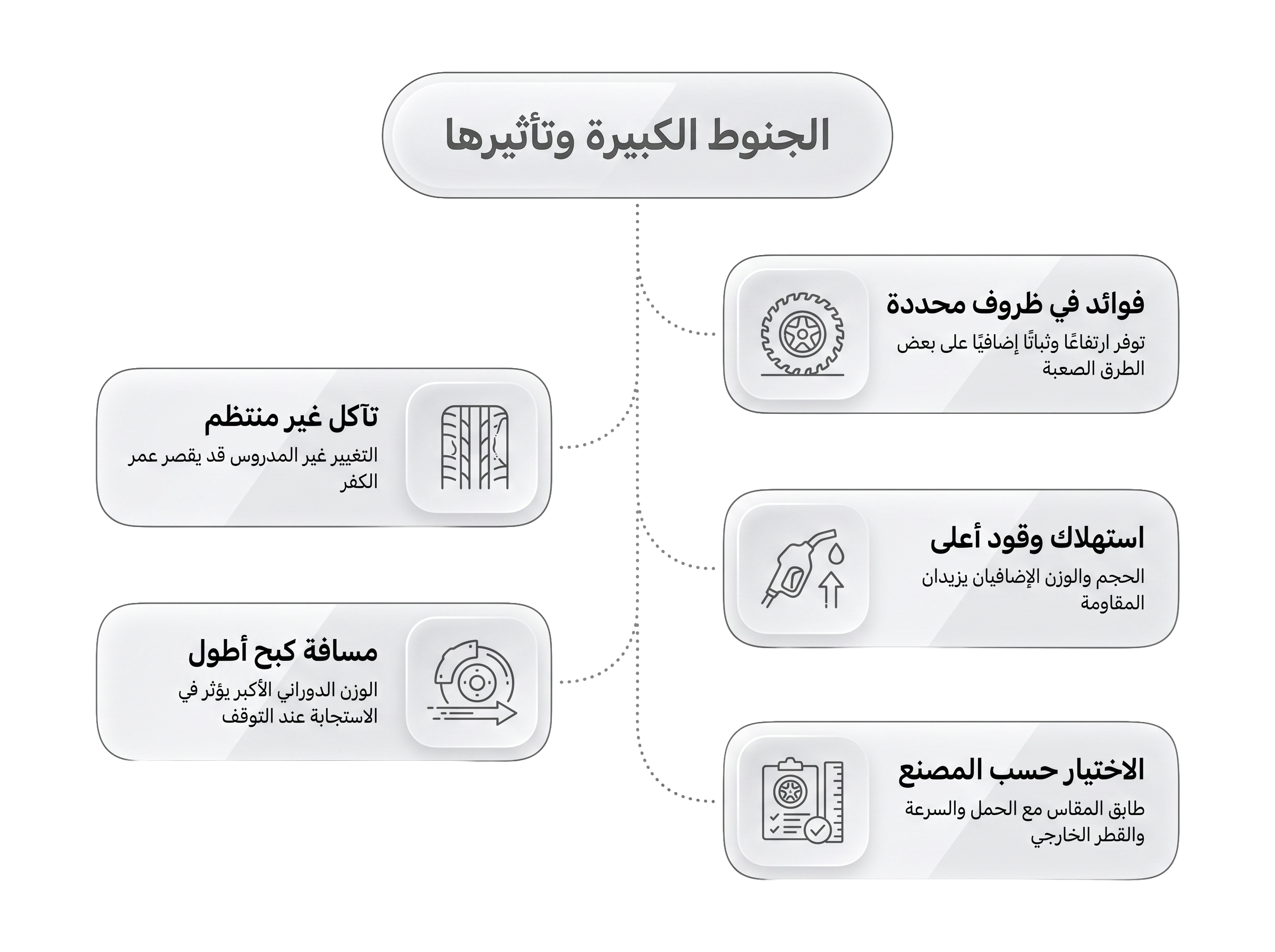
Do large rims damage truck tires? Yes, in many cases. Field tests reveal numerous issues that go beyond just the tires:
- Increased uneven tire wear
When rim size increases disproportionately to the tire design, the tire is subjected to uneven pressure. Experts confirm that mounting tires on non-compliant rims places abnormal stress on them, which can lead to failure. Furthermore, larger tires are known for not lasting as long as smaller ones.
- Reduced fuel efficiency
The impact of rim size extends to fuel consumption because increasing the rim size means increasing unsprung weight and rotational mass, which negatively affects acceleration, braking, ride quality, and fuel efficiency.
When the overall tire size increases, its circumference grows, forcing the engine to work harder to rotate it. Larger tires also require more torque from the drivetrain. The result? Higher fuel consumption and reduced range.
- Degraded braking performance
Braking becomes more difficult with larger rims due to the increased rotational weight of the tires and rims, which requires more force from the braking system to stop the truck.
Some studies have indicated that large rims can significantly increase stopping distances, making the vehicle less safe. Additionally, increasing the outer diameter of the tire lengthens the moment arm between the axle and the road surface, forcing the braking system to work harder.
- Increased stress on the suspension and transmission
The impact of rim size is not limited to the tire itself but also affects the truck's mechanical components. Larger tires place additional stress on all drivetrain components and can damage the suspension, tires, and rims.
- Risk of wheel arch rubbing
Tires may rub against the inner wheel well when installing larger rims without lifting the truck or modifying the wheel arches, especially at full steering lock. This friction can damage both the tire sidewall and the wheel well itself.
- Reduced Ride Comfort
As the sidewall height decreases with larger rim sizes, the truck's ride becomes harsher and stiffer, as the shorter sidewall cannot absorb shocks and vibrations as effectively as a taller one.
"Larger rims increase uneven wear, fuel consumption, and braking distances, while putting extra strain on the suspension and transmission and reducing ride comfort."
The Impact of Rim Size on Truck Tires and Safety Systems
Beyond the direct mechanical effects we discussed earlier, such as wear and fuel consumption, there is a subtle yet critical aspect that many drivers overlook: the impact of changing rim size on a truck's electronic safety systems:
- The Impact of Large Rims on Electronic Safety Systems
Changing rim size confuses the speed sensors in ABS, TCS, and EBD systems because the tire's outer diameter deviates from factory specifications.
- Inaccurate Speed Readings
The speed calculated by the sensors differs from the truck's actual ground speed, creating a data discrepancy sent to the Electronic Control Unit (ECU).
- Inappropriate ABS Activation
The ECU may misinterpret mismatched tires as wheel lock-up during braking, triggering the system at inappropriate times, which increases rather than decreases stopping distances and compromises driver safety.
- Strain on Wheel Bearings
The additional weight of massive metal rims places immense load on front wheel bearings and axle assemblies that were never designed for such extra torque.
- Wear on Suspension and Steering Components
Heavy tires put stress on tie rods, ball joints, and control arms. Meanwhile, the short sidewall fails to absorb impacts, causing vibrations to transfer to the power steering pump and steering box, leading to dangerous play in the steering.
- Increased Operating Costs
Low-profile tires are more expensive. And they are more susceptible to punctures and sidewall cuts from deep potholes.
- Poor economic feasibility
The doubling of periodic maintenance and tire replacement costs conflicts with the economic goals of heavy transport fleet owners.
Changing the rim size disrupts the speed sensors in ABS and TCS systems, causes inaccurate speed readings, and may trigger the anti-lock braking system at inappropriate times, compromising driver safety.
When are larger rims a suitable choice?
Despite the aforementioned drawbacks, it cannot be said that larger rims are a bad choice in all cases. There are specific situations where larger rims may be appropriate, including:
- Driving on off-road terrain frequently, as larger rims provide better ground clearance and improved traction.
- Harsh weather conditions, such as driving in sand, mud, or snow.
- The need to increase load capacity, as larger tires increase load capacity and ground clearance.
In any case, you should choose the rim size with extreme care and in accordance with the manufacturer's recommendations, which we will explain in detail in the following section.
How do you choose the right rim size for your truck?
Here are some practical tips to help you avoid the negative effects of rim size on your tires:
- Adhere to manufacturer recommendations
The rim diameter must match the tire diameter as specified by the vehicle manufacturer. Be aware that installing rims outside these recommendations places abnormal stress on the tires and may lead to failure.
- Maintain the overall outer diameter
If you want to change the rim size, try to keep the overall outer diameter of the tire the same to maintain the accuracy of the speedometer and odometer, avoid issues with the braking system, and reduce the risk of tire rubbing against the wheel arch.
- Choose the optimal ratio
17 and 18-inch rims are considered the "sweet spot" for most tires between 33 and 37 inches for mixed use (paved and off-road), as they provide sufficient clearance for modern braking systems while maintaining the sidewall height necessary for grip and protection.
- Consider the load index and speed rating
You must ensure that the new tire meets your truck's load and speed requirements, as ignoring these ratings could compromise your safety.
It is crucial to choose a balanced size that maintains the overall outer diameter while adhering to manufacturer recommendations and load and speed ratings.
Before deciding to install larger rims on your truck, ask yourself: what is the primary purpose of using my truck?
If you primarily drive on paved roads and use your truck for commercial transport, it is essential to stick to the original rim size as a safer and more economical option.
However, if you are an off-road enthusiast, choose a rim size that strikes the optimal balance between performance and safety, while always adhering to the recommendations of tire and rim manufacturers.
Always remember that the impact of rim size on the tire directly affects your safety, the safety of your cargo, and those around you on the road, so choose wisely to ensure your safety.