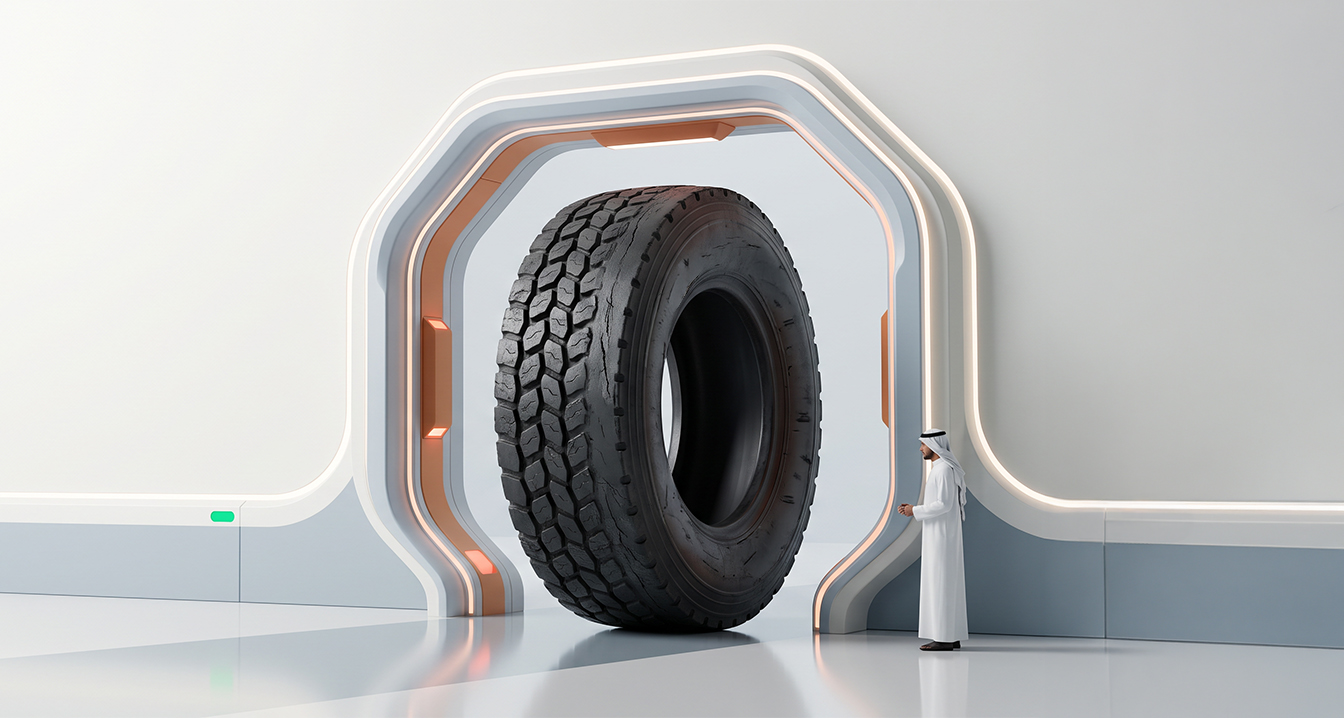
Imagine you're driving on a highway, and suddenly you hear a loud pop – unfortunately, it's a tire blowout! Millions of drivers worldwide have experienced this situation, and it's one of the most dangerous causes of accidents. But what if we told you there are new tires that won't blow out, no matter what?
Yes, we're talking about "airless tires," also known as non-pneumatic tires (Airless Tires)).
This amazing innovation isn't just an idea on paper; it's a reality that major global companies like Michelin, Bridgestone, and Goodyear are actively working on. As this technology gradually enters the market, we could witness a true revolution in the world of cars and transportation.
So, what are these tires? How do they work? And could we see them on our roads in the Kingdom and the Arab world soon? Let's dive into the details.
What are Airless Tires?
Airless tires, or non-pneumatic tires, are a new type of tire that relies on a solid or mesh internal structure instead of air pressure to maintain its shape and flexibility. This means they don't need inflation, making them resistant to punctures and blowouts.
- Traditional Tire:
It relies on internal air pressure to maintain its shape, and even a small puncture can lead to a blowout.
- Airless Tire:
It relies on an innovative engineered design (often a flexible mesh structure), making it unaffected by punctures and less likely to lose balance.
Airless tires are the next generation of tires, featuring a flexible mesh design that completely eliminates the need for air, making them resistant to punctures and blowouts, and ultimately safer on the roads.
How Do These Tires Work?
Airless tires operate through an internal design resembling "honeycombs" or "mesh wheels." This structure allows the tire to compress and rebound when encountering bumps or potholes, just like an air-filled tire, but without any risk of pressure loss. Some prominent examples include:
- Michelin Tweel:
A mesh tire used in agricultural and military equipment, which has proven highly efficient in challenging environments.
- Bridgestone Air-Free Concept:
Relies on a radial design made of reinforced plastic, providing the tire with flexibility and stability.
- Goodyear ReCharge:
An experimental tire whose rubber material is reshaped via 3D printing using sustainable materials.
Expected Benefits of Airless Tires:
Before we delve into these advantages in detail, it's important to recognize that innovation in the world of tires isn't just about appearance or design; it's about the direct benefits to the driver.
Airless tires were developed to solve chronic problems that drivers have faced for decades, such as the risk of blowouts, high maintenance costs, and negative environmental impacts.
Therefore, considering these advantages isn't a luxury; it's a foresight into a safer and more sustainable future for driving. These tires will help achieve the following:

- Eliminating the blowout problem:
According to the National Highway Traffic Safety Administration (NHTSA) in the United States, over 11,000 accidents annually are caused by tire-related issues. With airless tires, this risk is expected to disappear almost entirely.
- Longer lifespan and lower cost:
Michelin reports indicate that airless tires can last up to 30% longer than traditional tires because they are not subject to wear caused by unbalanced pressure.
- Environmentally friendly:
Thanks to their recyclability and reduced need for frequent tire changes, this technology contributes to lowering rubber waste, which amounts to over 1 billion discarded tires annually worldwide.
- Consistent performance:
Traditional tires are affected by seasonal changes (expansion in summer and contraction in winter), whereas airless tires maintain constant pressure and stable performance in various conditions.
Airless tires are expected to bring about a radical transformation in the world of driving, thanks to their long lifespan, stable performance, and ability to almost entirely eliminate the risk of blowouts.
Challenges and obstacles facing this industry:
Before discussing the obstacles hindering this innovation, it's important to remember that any new technology undergoes a long period of testing and development before reaching drivers. While the concept of airless tires seems ideal on paper, the path to widespread adoption is fraught with technical and practical challenges that cannot be ignored. These obstacles include:
- High cost: They are still significantly more expensive than traditional tires.
- Weight: Their solid design makes them relatively heavier.
- Comfort: They have not yet reached the same level of comfort and smoothness offered by traditional tires.
- High Speeds: Tests still show that these tires need further development to withstand speeds exceeding 200 km/h.
Studies and Statistics on the Future of This Technology
First, it's important to realize that the future of airless tires is not based solely on theoretical predictions, but on real data and precise analyses of the global market. These studies provide us with a clearer vision of how serious companies are about adopting this innovation and the extent of change that may occur in the tire industry in the coming years.
- A 2024 report by MarketsandMarkets predicted that the airless tire market size would reach $60 billion by 2030, with a compound annual growth rate (CAGR) of 5.9%.
- According to a Michelin study, proper tire maintenance reduces accidents by 30%, making airless tires candidates to reduce this percentage even further.
- The U.S. Environmental Protection Agency (EPA) also stated that high-quality tires reduce fuel consumption by 4-6%, a benefit that this technology can enhance.
Global Company Experiences:
It's useful to know that innovation doesn't remain just an idea in laboratories, but is tested in real-world settings and on various vehicles. This is where the efforts of global companies are evident, who have invested their money and expertise to turn this idea into a tangible reality. This concept has been applied in several areas:
- Michelin Tweel:
Currently used in tractors, heavy equipment, and military robots, it has proven highly successful in challenging environments.
- Bridgestone Air-Free:
Applied in bicycles and some small cars in Japan as an experimental phase.
- Goodyear :
Developed a tire that can automatically repair itself using 3D-printed rubber materials.
What does that mean for the average driver?
Before delving into the details, it's important to put ourselves in the shoes of the average driver who seeks safety, comfort, and cost savings. What good are all these innovations if they don't directly impact their daily lives? We will review the most significant benefits every driver will experience when using airless tires.
- Higher Safety: You will no longer worry about a tire blowout on the highway.
- Lower long-term cost: Longer lifespan and less maintenance.
- Sustainability: Contributes to reducing environmental pollution.
- Fuel efficiency: Thanks to maintaining constant pressure and reducing rolling resistance.
Darbk Company's Role in Innovation:
This raises a very important question: What about the Kingdom? Darbk Company, which obtained the Saudi Quality Mark, has proven its commitment to safety and performance in the harshest climatic conditions. With accelerating global developments, Darbk strives to adopt the latest innovations suitable for the environment of the Kingdom and the Gulf. Since this technology is not available today, we have worked with a clear vision to avoid all previous problems and achieve the same efficiency as airless tires. And remember that...
- Darbk tires are designed to withstand high temperatures and rough roads.
- Full commitment to Saudi Quality Mark (SASO) standards, which reduce breakdowns by 40%.
- The possibility of integrating future technologies, such as airless tires, into upcoming production lines, to offer Saudi drivers an option that combines safety, quality, and innovation.
Just as Darbk was the first to obtain the Saudi Quality Mark, it may also be the first to introduce this futuristic technology to drivers in the region.
With a Saudi vision that keeps pace with the future, Darbk Company continues its commitment to safety and quality, striving to adopt airless tire technologies to provide Saudi drivers with performance that exceeds expectations, even in the toughest conditions.
In conclusion...
Tires are not just rubber rings wrapped around wheels; they are the first line of defense for your life on the road. With the innovation of airless tires, we may be looking at a future free from blowouts and rapid wear.
Although this technology is still in its early stages, drivers in the Kingdom and the Arab world may soon see it, thanks to pioneering companies like Darbk, which not only delivers quality today but also plans for a safer and more sustainable future.
With Darbk… the future starts with your car's wheel.